
Featured

To the Undecided: 10 Reasons Why I’m Voting Republican

…and why you should too.

I somehow can’t believe I’m writing an article advocating for you to vote Republican in this year’s general election. I’ve never done this before. Instead of firing off random responses to what I see in the news or see on social media and attracting controversy, I thought it would be more useful to write a longer piece to lay out a position on why voting Republican is not only reasonable, but preferable. I trust there are many people who are undecided. My home state, Michigan, is an important swing state. So, this is chiefly for those who haven’t made up their mind yet.

Keep Going or Change Course

When considering which administration we want to be leading our country, we need to ask ourselves a simple question: do we want to keep going in this direction or do we want to change course? It’s not a tough question but it’s worth thinking through.

I’ve spent much time throughout my adult life outside the U.S. So, I see things with a different lens than many U.S. citizens do. With the benefit of comparing America with other countries, I’ve come to further appreciate and develop a love of my country. One example of this is when I defend our great healthcare as world-class when I hear people complain about it. I’ve experienced the difference between handling life-threatening disease in both China and the U.S. Americans have no idea how great the patient-centric healthcare is in the U.S. It is heads and shoulders above that in China and most of the rest of the world. Yet, I didn’t know this until I experienced something else, somewhere else.

This past summer, I took a day trip with my dad through the Lake Michigan lakeshore, winding along forgotten roads through sleepy towns just seeing what we could see. And, it was pure therapy.

1. Sleepy Towns with Shiny Dispensaries

But, one thing stuck out to me. Every one of those sleepy towns had a shiny new cannabis shop. I didn’t see much industry and thought about my own time finishing high school. I don’t know about you, but I’ve smoked cannabis back in the day before it was legal. And, what I can tell you is that there’s no benefit for most ordinary people. I would open a bag of Cheetos, sit and laugh for a while while watching something on TV and eventually fall asleep. I was completely unproductive. Thankfully, this phase of life during my youth didn’t last long, and I haven’t touched it since.

So, when I drove through those sleepy little towns, I thought about myself getting ready to graduate high school there and what it might be like to bag groceries at the local grocery store while thinking about one’s life direction. And, I thought about myself eating a bag of Cheetos, laughing through a mini series and passing out on the couch after my shift at that local grocery store. How sad this is for the youth of those small towns.

This brings me back to China. China would never legalize marijuana. The reason quite simply is that the country endured corruption from within when its people fell to opium addiction. They even lost Hong Kong to the British for over 150 years as part of the concessions from the “Opium Wars”, fought because Britain sustained Chinese opium addiction through its unfair trade. They learned something. No recreational drugs for the people except tea and coffee. Other countries in Asia are similar. They don’t want their youth squandering their lives at home eating bags of shrimp chips, watching TV and passing out with no motivation to better themselves.


The legalization of cannabis was up for votes in the State of Michigan in 2018. I remember hearing the rationale for making it legal. I was told it was great for a few reasons, but two stuck out. Namely, it keeps minor offenders out of prison so the prison system can focus on “real crime” with stretched resources. Secondly, the State would severely tax cannabis as a sin tax and earn much revenue to help pay for other programs. To me, it seems like there can be other ways of punishing minor crime rather than making it legal for convenience. And, it sounds like the State is making money off peoples’ weakness, which raises some more interesting questions.
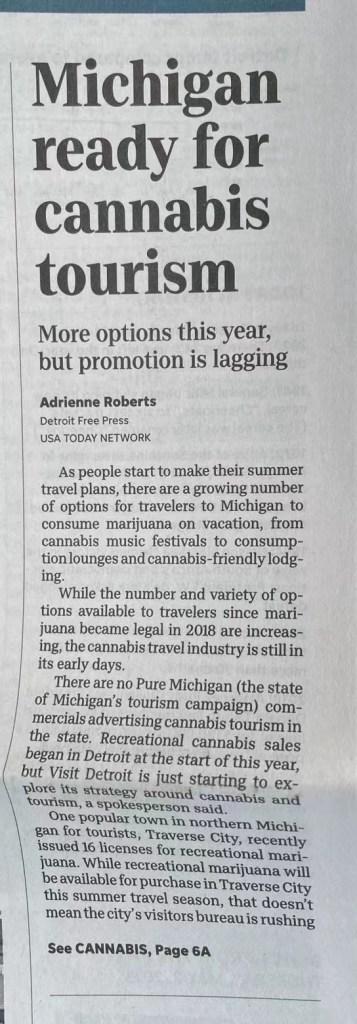
Putting cannabis on the vote was a Democrat-led decision. One down for Democrats in my mind. Many more to go.

2. Male and Female He Created Them

One of the major changes I’ve seen over the past year in my hometown area in Michigan is bumping into more androgyny. This may be a trend. This past year, I’ve encountered men with beards and dresses in service roles at the mall and in coffee shops like Starbucks. I only ran to the mall a couple times over the summer. When I go, I like to buy nice soaps at a soap shop called Lush. This past visit, I couldn’t tell if it was a man or woman serving us. Not a big deal, but I find the growing ambiguity a bit strange. A few minutes later, we’re in line at Barnes & Noble with a stack of books. I’ve been going to B&N for decades as a place of relaxation. Now, with my kids in tow, we carry stacks of books to the register each visit. If it’s one thing I don’t mind spending money on for kids, it’s books.

“Next” I hear as I walk to the teller and lay my books down. I look up and was literally stuck in place. A man in a dress with stubble, make up and an unnatural voice asked if I found everything ok. “Yes, thanks.” Kids next to me looking up. Not sure what’s going on through their minds, but I paid up, grabbed my stuff and politely thanked the man (?) on the way out to the parking lot. I found the encounter so jarring that I didn’t know what to make of it.

Flabbergasted would be a good word for it. That this is normalized now in certain stores, like Barnes & Noble.

The fact of the matter is that men and women are different and unique. Are bearded men wearing dresses in a state of denial? Should we treat as normal what is clearly abnormal behavior, and encourage denial of reality? To be clear, I don’t believe in abusing or bullying. I simply think we should not force abnormal behavior upon society as something we must accept.

Would it be ok if women walk shirtless outside in the hot summer if they identified as a man?

One just needs to have a quick read of this bill which passed in 2021 to understand how this culture has been changing and is being forced upon us.

(Read Congressional Act here for details: H.R.5 – 117th Congress (2021-2022) )

Key language: “The bill allows the Department of Justice to intervene in equal protection actions in federal court on account of sexual orientation or gender identity.

The bill prohibits an individual from being denied access to a shared facility, including a restroom, a locker room, and a dressing room, that is in accordance with the individual’s gender identity.”

I have two young daughters. I care when happens to them when they grow up, and I want them to grow up in a safe environment.

This is a Democrat bill.

3. Perspective and Arguments by Tall White Guys aren’t Valid

Shortly after, I raised my concerns with a woman quite close to me (who was white), and I was told that as a tall white man, I’m used to social structures set up in the way I like. This is literally what I was told. I tried to explain that was ad hominem. Ad hominem is a logical fallacy, when one believes an argument is invalid because of who makes it. We see this all the time. An argument should be considered based on its merits, not based on who makes it.

Yes, I am used to men not wearing dresses. But, I suppose my point of view is invalid because I am a tall, white man. I should simply relax and treat this behavior as normal.

Many call these values “woke”. I used to think this was some concern of conservative people who are simply tired of liberal values and not to take too seriously. This was until I received an email from my alma mater, Michigan State University several years ago from James Madison College sharing that the school was making a commitment to addressing systemic racism and the perpetuation of whiteness. There were a series of initiatives outlined that the school would undertake to do this. I emailed the school in response thanking them for the update and that it was noble to pursue racial equality. But, I asked if they could use more inclusive language, as I was concerned about highlighting the “perpetuation of whiteness” in our pursuit of racial equality.

I didn’t receive a response, but I hope the school has decided to tone down on the racist language toward white people. All people should be treated equally.

We seem to be in an era where if you want to wear a dress as a bearded man – that’s ok in many public enterprises. But, if you challenge this as a white guy – watch out!

To be fair, if men want to wear dresses, it should be done in the privacy of their own homes. It shouldn’t be a crime. But, I don’t want my kids exposed to this abnormal behavior in public.

This should be obvious. Normalizing abnormal transsexual behavior is a Democratic Party value. Addressing this – including in the education system and in sports – is a Republican Party agenda.

4. The Economy is Important

Eating out has been very expensive. One of the immediate changes my wife and I noticed this past year is the price of groceries. To be sure, we eat well. Like education, high quality food is one of those things we don’t mind spending money on. But, the dollar definitely doesn’t go as far as it used to.

I’m aware that one of Trump’s policies is to lower corporate tax, while Harris wishes to increase it. We should align on good policy, not just good feelings.

I watched much of the Democratic National Convention. Some very inspiring speeches. People want to feel good. People want leaders with empathy and hope, two words that were continuously spoken. I agree in this desire and wish we had it. But, I cannot agree with or vote in support of much of the Democratic party’s agenda or its values. One is tax hikes on companies. Cut from 35% to 21% prior to Biden and now an agenda to raise back up to 28% does not help the economy or the people. The legend of Robin Hood has captivated hearts for decades. But, we need to move beyond the hope for legend and good feelings this year and look at what policies are actually best for the US and its people.

Raising taxes – whether corporate or individual – is not good for us.

(Read piece on taxation and economy: Wall Street Journal Editorial Board: The Harris Plan to Lower Your Wages)

There is other evidence under Harris and Biden that is concerning: the highest inflation in forty years, highest cost of housing in the same timeline, and the highest ever consumer credit card debt. I don’t have as high a level of confidence in the Democrat’s ability to run the economy in a healthy manner.

5. Sanctity of the Unborn

“I never even think of or even consider abortion so that is fair enough if important that does only leave the Republicans as the only option.”

This was part of a conversation I was having with a friend who leans strongly toward the Democrat position and very strongly against Trump specifically. When making my case with this friend on why I believe the Republican platform is strongest on the key issues, I raised the sanctity of unborn life as a major concern. This was not even a topic of conversation until that moment. He recognized that if my values on the sanctity of the unborn are important to me, then I really only have only one choice. We cannot fool ourselves into believing that we can vote Democrat if we value children in the womb.

Kamala Harris was completely unknown as vice president in the public eye, except for one issue: abortion. She traveled the country connecting with women and speaking about women’s right to an abortion as protected by federal law. Making sure women have access to abortion “care” and “reproductive rights” anywhere in the United States at any stage of pregnancy is a prime focus. She shook her head during the debate with Trump when he said she’d allow abortion until the ninth month of pregnancy. Yet, the evidence suggests that is precisely what she would do. Tim Walz, her VP selection, is renown for signing the first abortion guarantee bill in the United States in Minnesota after Roe vs. Wade was overturned – and for all terms of pregnancy.

Michigan’s Democrat governor repealed the regulation for a 24-hour waiting period in June of this year for women who want an abortion. While some women may be emotionally distraught and wish to seek an abortion to get out of their situation, they should be given a window of time to think through their decision and even receive counseling. Now, Michigan has one of the most extreme abortion guarantees in the nation – with no limit on term when one can have an abortion. Think about it: does it make sense that a child can be killed in the womb and be called “care” and a “right”, yet a couple weeks later the same activity would be considered a criminal act of murder by the larger public? It makes no logical sense.

Unfortunately, many men have been deadbeats, impregnating women and running off or shirking their responsibilities. And, what about the exceptions?

There are many things to consider and act upon so that women don’t suffer unfairly. And, what is the role of churches today? Should they not have a role in both caring for single mothers or even in taking children who are unwanted?

If life begins in the womb, as many if not most believe, then it has inestimable value and should be protected.

6. Tangible Experience

With all the talk and skepticism today in politics and challenges in believing the truth of what candidates say, I think it’s useful to look at the experience of the candidates and their primary advocates. While I can’t really point to strong tangible positive experience that benefits people from Harris, Walz or Taylor Swift, I can point to very strong tangible positive experience from Trump and Elon Musk. Vance doesn’t seem to disappoint.

During a trip to Chicago in 2018, my wife surprised me by recommending we stay at Trump hotel. She read the reviews. This may have been a pivotal point in changing my perception of Trump for the better. Quite simply, the hotel is superb. The view is the best in Chicago, right on the river with unobstructed views of Lake Michigan. The service was spectacular with cake, chocolates, Cadillac limo service for all hotel guests as requested, etc. And very cozy. It was so nice that I looked into a condominium in an upper floor as a potential investment property though I never wanted to own a condo. While the media tells us Trump is erratic, what my experience tells me is that he knows how to develop and run a superior business.


I’ve also ridden in many Tesla’s over the years. And, I use X as a source of media. Recently, it’s been announced that SpaceX will bring the American astronauts back from the International Space Station when no one else is able. Clearly, though Elon Musk is eccentric he knows how to positively disrupt an industry and provide unprecedented excellence. Trump recently announced that Musk would lead an efficiency commission for the government if he is elected President. Eliminating waste, cutting down on further regulation and bureaucracy would lead to excellent results for the American government. And, it’s worth considering why he is so passionately opposed to a Harris administration.

JD Vance’s accomplishments I’m less familiar with. But, I must say he makes a lot of sense to me when he’s challenged by journalists. He seems to be a clear thinker and knows how to defend himself. He’s taken interviews in dozens of media, both friendly and unfriendly. Where are the media interviews from his counterpart?

7. Legal Entry into the U.S.

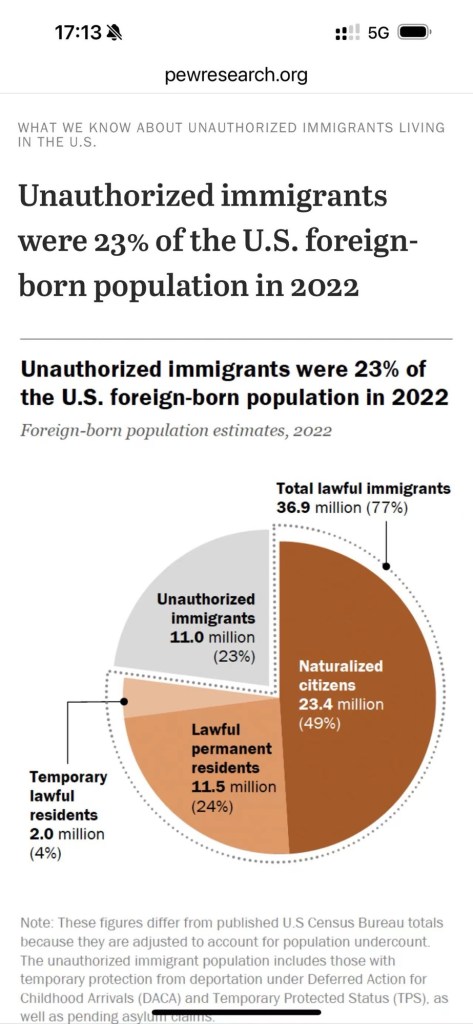
This is an issue for many American voters. It doesn’t sit that close to home to me. But, it is interesting why it’s even an issue. People entering the U.S. should enter legally, just like other countries. I spent over two years and much sweat and legal fees securing U.S. residency for my foreign-born wife. She is quick to point out how crazy it is for the U.S. to simply allow people across the border and make them legal for no good reason aside from convenience.

Europe made some very bad decisions by not being tough on borders and have paid the price. The US should be tough on its borders. To be clear, being tough on borders doesn’t mean being prejudiced or mean. It simply means upholding the law. Either all people should adhere to the law or the law should be changed. Simply turning illegal aliens into legal residents because it feels good or is more convenient is both absolutely foolish and devalues U.S. residency, something many around the world aspire to have – legally.
8. Peace through Strength

Peace through Strength is a key pillar of the Republican agenda. For all the claims that Trump is a friend of dictators and we need to move beyond strong-man leadership, the facts cannot be disputed that there is far more international conflict today than under Trump’s previous leadership. To be fair, the world is complex and it’s probably a stretch to claim no global conflict would arise if Trump was President again. And, some claim that a reason for some conflict today in the Middle East may be because of Trump’s Abraham Accords (bilateral agreements between Israel and other States) and other action.

Context aside, the fact remains that though Trump is blamed for much disrespect toward the U.S. on the international stage, there is much more conflict today than there was four years ago. Without question. I have front row seats to some of the rising conflict before us today. I spend much of my life close to the Taiwan Strait and have clients from both Taiwan and Mainland China. If Mainland China were to invade Taiwan, the most logical time would be when the world is distracted by other conflict. With an increase in official Chinese party language this past couple years indicating potential reunification, this may come upon us sooner than we expect. This would be at least if not more disruptive as the war in the Ukraine. I personally think the chance of a military conflict across the Taiwan Strait is relatively low. And, I don’t think it would happen if the status quo remains. But, if pushed, China’s leadership has been clear in its willingness to take action. My personal view is that a technology or export blockade is more strategic and likely than all out war. What would the U.S. and its allies do if there was a blockade or cyber war that cut Taiwan off from global trade but there were no lives lost?

The Biden and Harris administration has shown that it doesn’t provide enough of a deterrent to bad or even good actors to reduce conflict. We need to consider this point very carefully because international conflict affects prices and quality of life for people far away, in addition to security.

9. Parental Rights

California’s governor, Gavin Newsom, signed a law that should set off alarms for all parents. Assembly Bill 1955 (AB 1955) prohibits schools from notifying parents about their child’s desire to change their sex and to be referred by their incorrect pronouns. A term I’ve read about lately – gender dysphoria – is when one feels they are in the wrong body, that there is a dissonance between one’s felt gender and one’s body, what they were “assigned at birth.” The term itself is interesting. Who does the assigning at birth?

(Read for details: Bill AB 1955)

In California, regardless of age, if a child experiences confusion about their gender in school, the school is not permitted to tell the child’s parents. Importantly, this is not limited to high schoolers. This may also apply to primary school students.

Newsom is a popular leader in the Democratic Party. There are indications that these are shared values with many other Democrat leaders.

There are more examples of infringing on parental rights, but for me – this is enough.

10. Free (at least, Freer) Speech would be Nice

I realize that I have spent much time over the past couple years engaging in two unhealthy behaviors. The first is self-censorship of my own work and opinions. To clarify, editing written work to ensure a higher quality product and taking audience needs in mind is a good thing to do. What I am referring to here is going through my written work and opinions that I share in the public domain very, very carefully. And, nixing entire sentences, paragraphs, or even full articles for fear of the pushback. The second behavior is silence, assuming the more loving thing to do would be to simply let things happen and not get caught in the mess. The combination of being overly cautious or silent leads to a capitulation to evil. Killing children in the womb and calling it care is evil. Grown men wear dresses and calling themselves women is abnormal. Treating any race lesser than another is unjust. These things should be called out. And, my propensity of self-censorship and silence are both rooted in fear.

But, fear of what? Fear of man. Specifically, fear of losing my work prospects. I’ve had a very successful career working in public relations over the years. In a strange twist of irony, I’m not afraid of sharing my thoughts in Asia, where many people are in agreement or at least encourage an open exchange of ideas. I’m afraid of sharing this type of content with the American audience. In particular, the public relations and marketing professional audience. That audience is steeped in – and surrounded by – agendas that brands follow. Good or bad.

And, that, dear reader, is tragic. I am greatly saddened to confess that many of my skills of self-censorship, acute awareness of agendas, and silence in the face of evil may have been acquired and honed over the many years that I’ve lived in one-party China.

Should it not concern us when we see so many letters from the editor saying Trump is a “threat to democracy” or an “existential threat” instead of crafting their own persuasive argument against him? Or, when a President has his social media account shut down because he is such a “threat” while in office? Or, what about the fact that Harris and Walz are under nearly no media scrutiny as they ride on their crest of joy?

During the majority of this campaign, Democrat-supported media mostly claimed Biden was fit for office. The fact that Harris was not chosen by the people during the primaries but was snuck through after the public woke up during that embarrassing first debate between Biden and Trump should have us thinking. And, it should certainly not be thinking hopeful or joyful thoughts.

Make the decision that’s right for your family, your children and your country.

In conclusion, I want to leave you with this. One day, I was praying about our political issues and state of the nation. I was reminded of the moment when Moses, the great prophet of Israel was giving his final speech to the people as they were preparing to enter the promised land:

“Now Listen! Today I am giving you a choice between life and death, between prosperity and disaster. For I command you this day to love the Lord your God and to keep His commands, decrees, and regulations by walking in His ways. If you do this, you will live and multiply, and the Lord your God will bless you and the land you are about to enter and occupy.

But if your heart turns away and you refuse to listen, and if you are drawn away to serve and worship other gods, then I warn you now that you will certainly be destroyed. You will not live a long, good life in the land you are crossing the Jordan to occupy.

Today I have given you the choice between life and death, between blessings and curses. Now I call on heaven and earth to witness the choice you make. Oh, that you would choose life, so that you and your descendants might live! You can make this choice by loving the Lord your God, obeying Him and committing yourself firmly to Him. This is the key to your life….”

Deuteronomy 30:15~20

Continue reading “To the Undecided: 10 Reasons Why I’m Voting Republican”
How to Let an Old Wound Heal?  Still not Sure如何让旧伤痊愈?依然迷茫

My DEI experience in China 我在中国DEI的经历

I will sometimes tell a story to people about my experience waking up to the flaws of DEI thinking. I will never forget receiving an email from my alma mater sharing how the school would “address a whiteness issue” in the school faculty. Ironically, when I was there I don’t actually remember that many white teachers. The school certainly seemed the model of diversity, as many teachers were not only minorities but foreigners. So, my ears bristled and radar went up when I read this. I reached out thanking the school for seeking to provide fairness and address inequality but asked them to use more inclusive language so that all people groups felt included. Though I worded my email delicately and respectfully, I never received a reply.  

我有时会跟别人讲述我意识到DEI思维缺陷的经历。我永远不会忘记收到母校发来的一封邮件,邮件内容是学校将如何“解决教师队伍中的白人问题”。讽刺的是,我当时在母校的时候,其实并不记得有那么多白人教师。这所学校看起来确实是多元化的典范,因为很多教师不仅是少数族裔,还有外国人。所以,当我读到这封邮件时,我竖起了耳朵,警觉起来。我联系了学校,感谢他们努力提供公平并解决不平等问题,但要求他们使用更具包容性的语言,让所有族裔都能感受到被包容。尽管我的措辞委婉而尊重,但我从未收到回复。

Having lived outside the US for nearly half my life now with the majority of the time in China, I wasn’t really privy to all the debates and sensitivity around DEI and Wokeness – not fully understanding it until I read that email. Then, I realized something was wrong in the US culture – at least at some universities. When sharing this issue with a white male friend recently, he didn’t agree that it was offensive because white males have traditionally held power. That may be the case, but my position is to seek fairness and equality for all, and while doing this communicate with respect to all people groups, regardless of race or ethnicity. I think this is part of why there is such a push back with DEI today: some of how it’s communicated is simply unfair. 

我在美国以外生活了近一半的时间,大部分时间都在中国,所以我并不真正了解围绕DEI和觉醒主义的所有争论和敏感问题——直到我读到那封邮件才完全理解。后来,我意识到美国文化出了问题——至少在某些大学是这样。最近我和一位白人男性朋友分享这个问题,他并不认为这冒犯了白人男性,因为白人男性传统上掌握着权力。或许情况确实如此,但我的立场是为所有人寻求公平和平等,并在沟通过程中尊重所有人群,不分种族或民族。我认为这也是为什么如今人们对DEI如此抵触的部分原因,某些沟通方式本身就很不公平。

The Japan Experience 我在日本的经验

Back to my experience in China. I’ve been dealing with something very personal for nearly 25 years now on a daily basis which makes me really appreciate the American culture. But, before I dig into that, let me relate a recent trip to Japan with my family. When in Japan, we had a native Chinese immigrant to Japan take us around to different sites and back and forth from the hotel. Otherwise, we were largely on our own. It struck me like a shovel to the head how very unique Japan is in that no one wants to speak English. Absolutely nobody wanted to defer to English with me. I was flabbergasted. Gladly, my new Apple Watch has a translation function which translates voice to written Japanese. When needing to order a drink or rush the kids’ food, I spoke Chinese or English into my watch and showed the Japanese to the waitress who quickly understood and acted. No big deal. 

Rented Kimonos in Kyoto

回到我在中国的经历。近25年来,我每天都在处理一些非常令我头疼的问题。这让我非常欣赏美国文化。但在深入探讨之前,让我先讲一下我最近和家人去日本的一次旅行。在日本的时候,一位中国移民带我们参观了不同的景点,并接送我们往返酒店。除此之外,我们基本上都是自己一个人。这让我突然意识到,日本的独特之处在于没有人愿意说英语。完全没有人愿意在我面前用英语交流。我大吃一惊。幸运的是,我的新苹果手表有翻译功能,可以将语音翻译成书面日语。当我需要点饮料或催给孩子们上菜时,我会对着手表说中文或英文,然后把日语给服务员看,服务员很快就明白了,并采取了行动。这没什么大不了的。

Contrast this with China, in particular Shanghai. I cannot go one day without someone responding to my written or verbal Chinese with English. And, this has happened for 25 years. 

Every. Single. Day. 

So, when someone asks me how I liked Japan, I say – not really. There isn’t much of interest there for me. But, there is one thing – and, it’s huge. They don’t speak – and, don’t want to speak – English to me there. How amazing and refreshing was that? If I lived in Japan, I’m sure I’d be fluent in 3-4 years.

这与中国,尤其是上海的情况形成鲜明对比。我每天都会有人用英语回应我的书面或口头中文。这种情况已经持续了25年。

每一天。每一天。

所以,当有人问我是否喜欢日本时,我会说——不太喜欢。那里没什么让我感兴趣的东西。但是,有一件事——而且非常重要——他们不跟我说英语——也不想跟我说英语。这是多么令人惊喜和耳目一新啊!如果我住在日本,我肯定三四年内就能说一口流利的日语。

The Shanghai Experience 我在上海的经验

Contrast this with foreigners who have lived in China for decades who speak very basic Chinese. 

Decades! 

Is their rudimentary Chinese their own fault?  Partially, yes. Many people have not taken it upon themselves to take classes, or to study it in their down time because English is so prevalent. Or, maybe they initially did take classes and study it but ran out of steam. There is little reason to continue when there is very little opportunity in the “real world” to learn it. 

相比之下,在中国生活了几十年的外国人只会说非常基础的中文。

几十年!

他们的中文水平很差,是他们自己的错吗?部分原因是,是的。很多人因为英语太普及了,所以没有主动去上课,或者在闲暇时学习。又或者,他们最初确实上过课,在闲暇时学习过,但最终还是筋疲力尽。既然在“现实世界”里学习中文的机会很少,那么继续学习下去的理由就很少了。

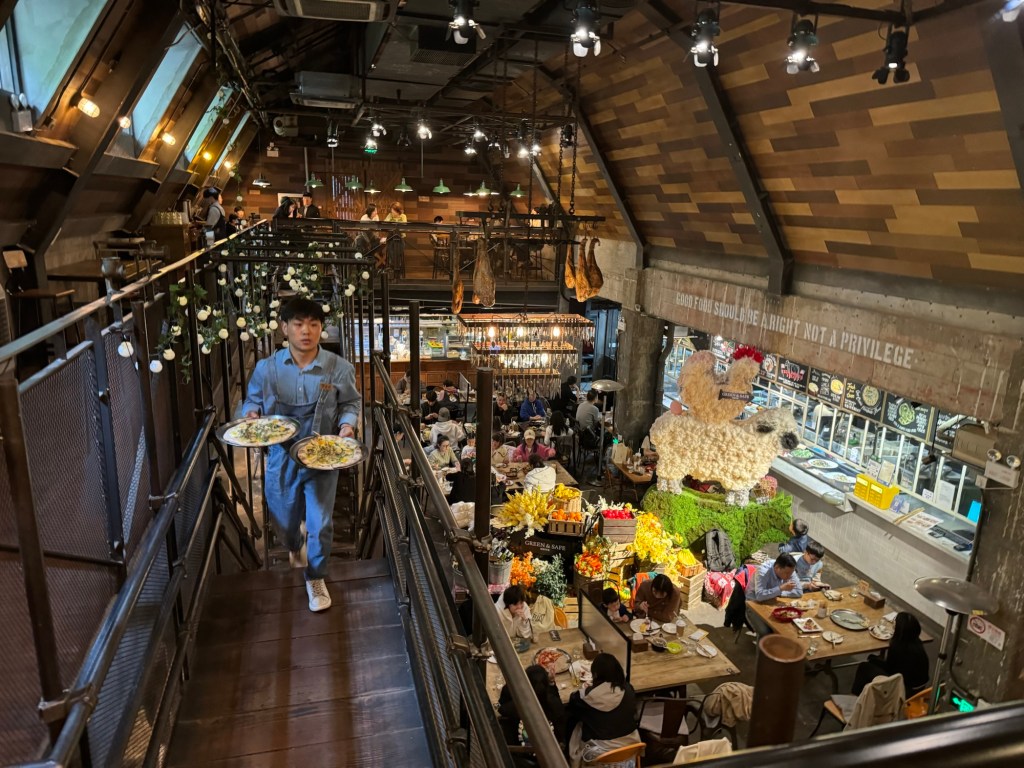
A Restaurant in Shanghai

To illustrate this, here is an example dialogue when in line at a coffee shop, standing behind a lady:  

为了说明这一点,这里有一个在咖啡店排队时站在一位女士身后的对话示例:

我:

Me: “你点好了吗” (Have you finished ordering?) 

Her: Turning to me 转向我: “Your Chinese is so good!”  

Me: (depending upon my mood in the moment 取决于我当时的心情)

Option One: “如果讲得那么好,你为什么用英文来告诉我?“ If my Chinese is so good, why are you telling me in English”  

Option Two: “你的英文说得真好“ (You’re English is great) 

Knowing nothing else, an outsider would perhaps think either she is very friendly or that I am a total unappreciative jerk.  It’s possible that both are true!  

But, put yourself in my shoes for a moment and imagine living in a country where every day for years you’re told that your language skill is amazing when you simply say “hello” or when people answer you in English. Or, worse, when you’re in a group of people speaking their language and someone switches to English when they turn to you, changing the whole dynamic.

外人一无所知,或许会觉得她很友好,或者我是个不礼貌的混蛋。两种情况都有可能!

但是,设身处地为我着想,想象一下,你生活在一个国家,多年来,每天只要你简单地说一声“你好”,或者别人用英语回答你,就会有人夸你语言能力超群。或者更糟的是,你身处一群中国人中间,有人转头跟你说话,就直接用英语跟你说话。 

I try to walk my Chinese friends through this scenario.  I ask them if they’ve been to the United States. And, when in the US, what language they speak to people when there.  And, finally whether or not people respond to them in Chinese or practice Chinese with them. Once we finish this scenario, many will “wake up” and have increased empathy with the foreigner’s experience.  But, most will not. Most will say “that’s fine if people wanted to speak Chinese with me.”  

我试着让我的中国朋友们体验一下这个场景。我会问他们是否去过美国。还有,在美国的时候,他们用什么语言和别人说话。最后,还要问人们是否用中文回应他们,或者和他们练习中文。一旦我们完成了这个场景,很多人就会“醒悟”,对外国人的经历更加感同身受。但大多数人不会。大多数人会说:“如果有人想和我说中文,那就没问题。”

That’s a crock of BS of course because I do that every day here. 

So, what does all this have to do with DEI and the initial topic above? 

Well, there is no DEI in China. There is no diversity, inclusion, and equality. This is an American concept. And, it’s a beautiful one when it really works. 

Inclusion is an amazing and beautiful value. Think about all those immigrants to America when they enter the melting pot. The government even provides free English language education programs. And, what an excellent environment to learn a language!   

这当然是一派胡言,因为我每天都在这儿说中文。

那么,这一切和多元文化包容性以及上面提到的那个话题有什么关系呢?

嗯,中国人很友好,不过根本没有多元文化。这里没有多样性、包容性和平等这理念。这是美国的概念。而且,当它真正发挥作用时,它是多么美好啊。

包容性是一种令人惊叹而美好的价值观。想想那些移民到美国,进入这个大熔炉的情景吧。政府甚至提供免费的英语教育项目。这真是一个学习语言的绝佳环境!

Diversity and Inclusion in China中国的多元化与包容性

What diversity means to a Chinese person is their Chinese ethnic diversity, which is 56 ethnicities and the majority Han Chinese. This does not apply to non-Chinese, who at their highest level of acceptance are ‘friends of China.’ 

All of this frustration aside, one may naturally assume that I don’t like China and question why I am here. 

对中国人来说,多元化意味着中国民族的多元化,即56个民族和占多数的汉族。但这不适用于非华裔,外国人最高接受度上被称为“中国的朋友”。 撇开所有这些挫败感不谈,人们自然会认为我不喜欢中国,并质疑我为什么在这里。

I do like China, and I do like Chinese people. I just don’t like language-bullying behavior. I’m fine to speak English, but let’s be fair and ‘win-win’, (a popular concept here) so we both improve. It shouldn’t be a zero-sum game. 

One thing I’ve done to address the issue is to introduce the “Chinese Day, English Day System” for my household. This is to ensure my children learn Chinese as they learn English. They too encounter this issue outside where people defer to English when speaking to them and comment on the “cute foreign kids” in Chinese when they think they can’t hear them. Sure, the cute foreign kids who were born and raised here. No wonder I’m hyper-sensitive about inclusion. 

我确实喜欢中国,也确实喜欢中国人。我只是不喜欢语言欺凌行为。我愿意说英语,但我们应该公平地对待,秉持“双赢”的理念,(这在当地很流行),这样我们双方都能进步。这不应该是一场零和博弈。

为了解决这个问题,我在家里引入了“中文日,英文日”制度。这是为了确保我的孩子们在学习英语的同时也能学习中文。他们在外面也会遇到同样的问题,人们跟他们说话时会用英语,当他们觉得听不懂的时候,就会用中文评论那些“可爱的外国孩子”。没错,那些可爱的外国孩子都是在这里出生和长大的。难怪我对包容性如多样化这话题感到那么敏感。

So, my wife and I are happy with our “Chinese Day, English Day System” where we speak only Chinese on one day, and only English on the next. We rotate on a daily basis. While imperfect, it does three things: it pushes us toward total fluency in both languages; it builds confidence in my kids when outside (who are already fluent in Chinese and just need a friendly language environment); and, it’s a tool for me to tell my local Chinese friends “sorry, today is Chinese day” when they automatically defer to English all the time. 

所以,我和妻子对我们的“中文日、英语日制度”很满意,也就是一天只说中文,一天只说英语。我们每天轮换。虽然不完美,但它有三个作用:它促使我们完全流利地掌握两种语言;它增强了我的孩子们在户外的自信心(他们中文已经很流利了,只需要一个良好的语言环境);而且,当我的中国朋友总是自动用英语说话时,我可以用它来告诉他们“对不起,今天是中文日”。

To bring it back to the Japan example, when I said there was nothing for me in Japan except for the lack of interest in English – and, how huge that was in terms of a cultural asset. Shanghai is precisely the opposite. Shanghai is a great city. World-class. Well managed. Beautiful. Best cuisine in the world. The ONLY thing I don’t like about it is the constant deferring to English. And, that’s a huge thing for me. It’s an old wound that all too easily opens. A scab that is constantly ripped off. 

I’d like to move on – to not care – but this is something I grew up with. This sense of inclusion and equality which is a very beautiful thing.  

We all want it. 

回到日本的例子,我说过,除了对英语不感兴趣之外,日本对我来说一无是处——而这,就文化资产而言,是多么巨大的财富啊。上海恰恰相反。上海是一座伟大的城市,世界一流,管理完善,风景优美,还有世界顶级的美食。我唯一不喜欢的就是总是要说英语。

这对我来说,是件非常大的事。这就像一个很容易揭开的旧伤,一个不断被撕开的痂。感觉一只没有被接纳。

我想对此不再在乎——但我从小就拥有某种价值观。这种人应该被接纳的包容和平等的感觉,非常美好。

我们都想要它。

Letter from Shanghai: Did COVID actually happen?

We’ve recently returned to Shanghai after 8 months in the US. In the past nearly two decades, this has been the longest period of time I’ve been away from China. I think it was needed.

I don’t know how to put it or what phraseology to use. But I think it’s possible that I have had some kind of potential mild Post Traumatic Stress Disorder (PTSD) from my experience in Shanghai during the draconian lockdown era in 2022. And I’m sure that I’m not alone. But I feel pretty alone because NO ONE talks about it here.

Shanghai Post-COVID PTSD

Before we left, you couldn’t go five minutes in a conversation without someone saying the word 疫情 (epidemic). It was in all conversations everywhere, at all times. Near the end, I decided to characterize 疫情 as a woman with an iron fist who ruled by fear. (A woman because the word in Romanized Pinyin, Yiqing, actually sounds like a feminine name, not due to some buried resentment within). She was on every street corner, brazen. The scorned woman, Yiqing.

One of many of what was intended as a humorous poster at the time

I began to feel a deep disgust for Yiqing. I stopped believing in her power. I kept most of my feelings to myself. It doesn’t help when the majority of people you meet fear Yiqing and allow her to dominate their lives. I suppose I, too, allowed her to dominate me through the anger I felt, which does – in one sense, remain.

Sometimes, the taste of freedom is tangible.

Back in end November last year, my family of four got on a plane from Shanghai fully masked and geared up to fend off Yiqing. We stopped in Seoul when the entire flight crew and captain changed. We took off our masks, never to wear them again – and, never to hear of Yiqing again.

But Yiqing nearly single-handedly squeezed all the joy of living in China out of me. And, that is worth being angry about.

The reason I think I may have Shanghai post- COVID PTSD is that I have always been a “China guy”. I’ve loved living in China, my family is Chinese, kids are effectively Chinese, and I’ve experienced some great – and tough – times over the years. I even experienced SARS in 2003, the predecessor to COVID.

A simple Google search says PTSD is: “a disorder in which a person has difficulty recovering after experiencing or witnessing a terrifying event. The condition may last months or years, with triggers that can bring back memories of the trauma accompanied by intense emotional and physical reactions.”

It goes on to say: “Symptoms may include nightmares or unwanted memories of the trauma, avoidance of situations that bring back memories of the trauma, heightened reactions, anxiety, or depressed mood.”

I think this second section captures my experience “to a T”. My wife has greatly wanted to return to China to maintain her work and return to her preferred city life. Most of my clients are chiefly Asia-based, so being on a similar time zone helps my work as well. But, it was going pretty well in the US; so well, that I dreaded return. Truly dreaded.

While I don’t have nightmares anymore, I did for a long time. I would especially hear the door buzz in the middle of the night, get up and check. No one there. The simple ignoble experience of being awakened in the middle of the night by hazmat suits and corralled in groups for mass testing was burned in my psyche so long that it took months to weedle itself out.

I couldn’t imagine what people with much worse trauma than I have do to deal with it. Veterans. What do they do? People who had witnessed bad accidents or lost loved ones? Without question, these experiences are far worse than what we experienced. I quit drinking a decade ago, not an option. Authentic prayer and complaining to God helps.

2022: The Forgotten Year in China

But, I know I’m not alone here. I am certain there are many others who have this unique mild PTSD. But I haven’t found them. Even my wife won’t talk about it. I’ve met a few people since coming back to Shanghai, and I like to chat with regular people – in the coffee shop, store attendants etc. I will periodically say something like “I just returned, and it’s totally different. No masks, no testing, it’s completely different. Three years of policy – disappeared!

And I ask them – what happened? Why is no one taking about it?

And, no one has anything to say. I am completely flabbergasted.

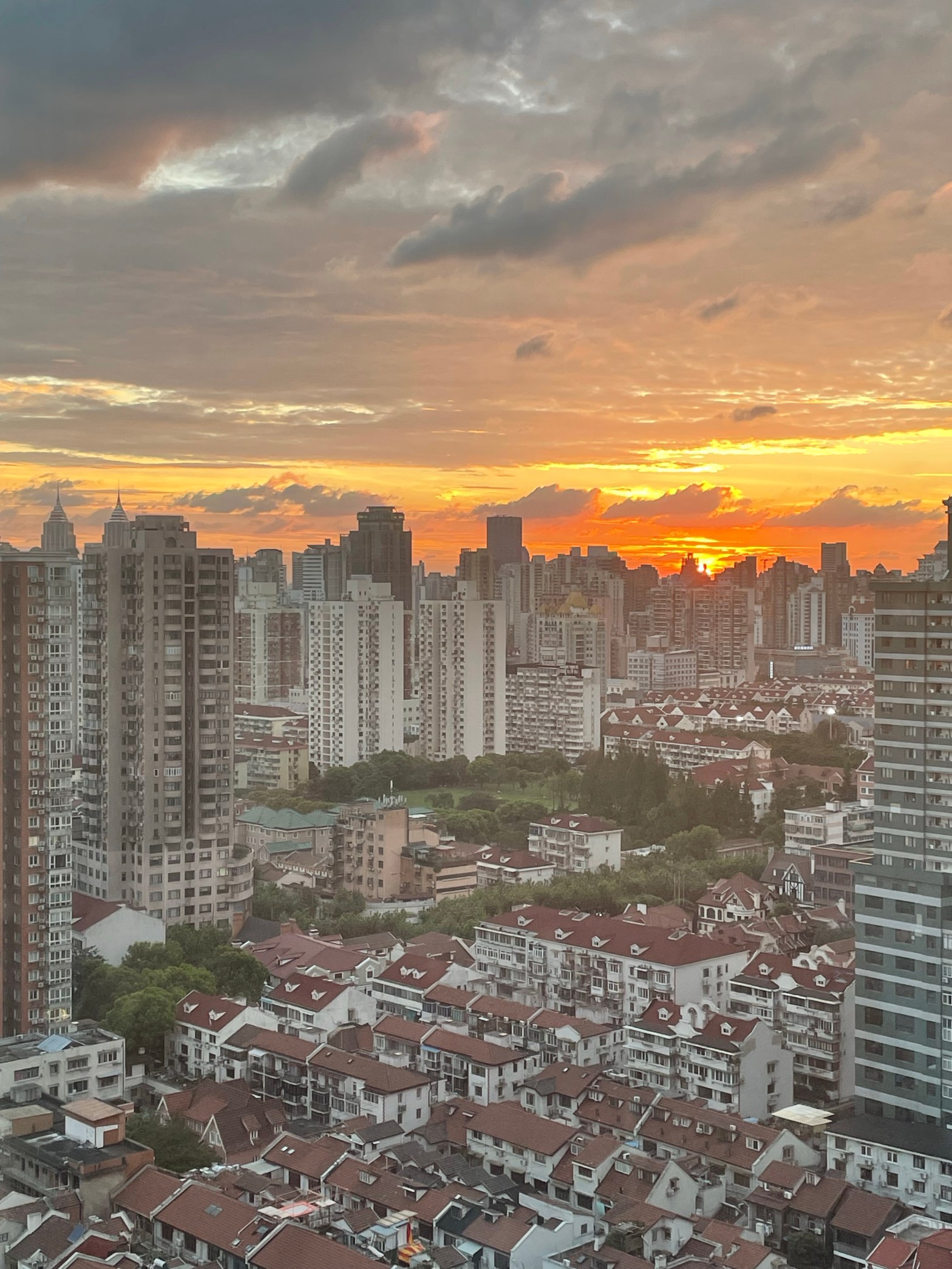
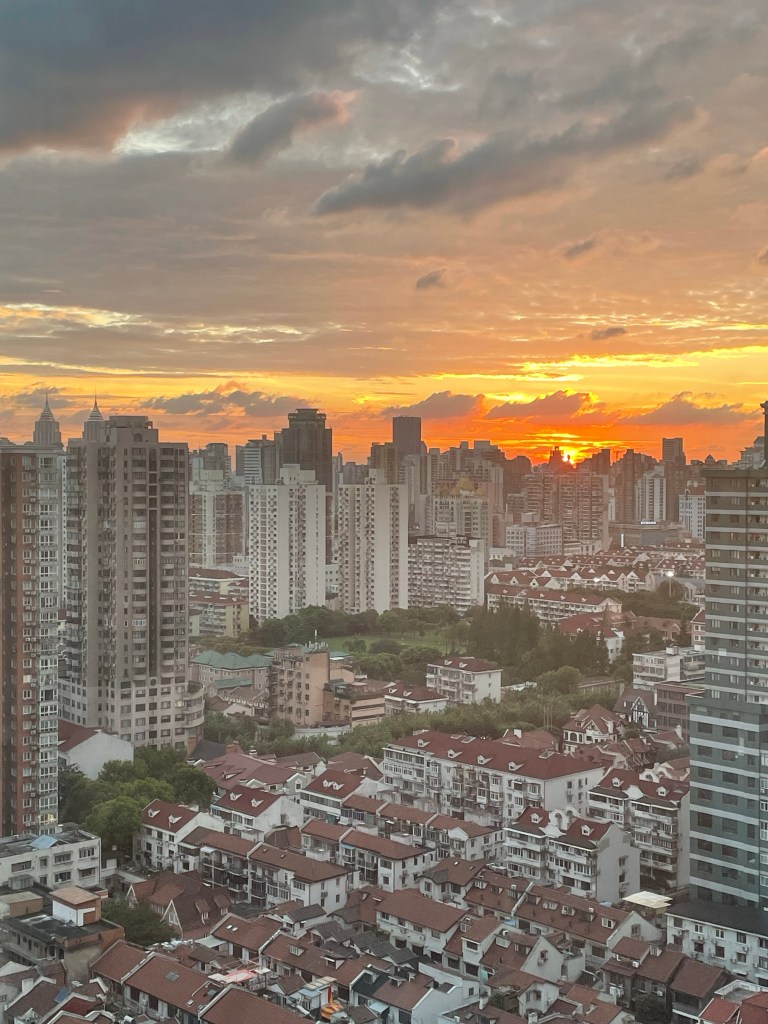
The peaceful sunset over today’s Shanghai

Spotless Mind

There was a movie I saw many years ago with Jim Carrey in the lead role: “Eternal Sunshine of the Spotless Mind” . It is not a comedy. I found it incredibly sad, and cried while watching it. The plot is two lovers who broke up and used a new treatment which slowly erased the memory of the relationship from their minds to ease their pain. Parts of the story made a lot of sense to me at the time.

In the same way, it feels like the people in Shanghai have undergone a treatment to wipe out all painful memories of COVID. As if it never existed at all. And they are back enjoying their normal lives and moving on.

Maybe I should undergo such treatment. It’s good to move on. What the heck is wrong with me?

And yet: this reminds me of when the topic of the past came up once with my in laws, who endured the toughest time in China’s modern history. A time of true suffering. In a rare moment, my mother-in-law began to share, and she was cut off by my father in law with “no need to discuss”.

“Resilience” is one of those prized words from the corporate lexicon. It continues to be sought after and celebrated. If resilience is the ability to move on and overcome challenges, Chinese must be some of the most resilient people in the world. I’m uncertain if it’s resilience, denial or something else going on though. I’m equally uncertain if it’s something to learn from or to challenge. So, I keep to myself for the most part and internalize. Maybe that’s what they have been doing too?

China, COVID-19, and Business

Here’s a piece I wrote on my company blog about China as we wrap up 2022 – the year of the lockdown – and look toward 2023 with hope, possibly a bit of anxiety, and a lot of residual ambiguity. What does this mean for communicating as a company? Open up to read more.

“China, COVID-19, and Business: What to Expect in 2023”

Happy Holy Birthday 圣诞节快乐!

My Chinese father in law sent me a WeChat message on Christmas Day addressing his grandkids saying something to the effect of “when you get gifts today, remember to ask your dad and mom the origin of Santa Claus, Christmas trees, why it occurs on December 25, etc and have them tell us.”

我的中国岳父在圣诞节当天给我发了一条微信转给他的两个孙女儿大意是“今天收到礼物的时候,记得问爸爸妈妈圣诞老人、圣诞树的由来,为什么在十二月 25 庆祝等,让他们告诉我们。”

I responded with my understanding of things and a caveat that I didn’t look it up, but that’s how I see it. Waking up early this morning, this of course encouraged me to look it up a bit afterward. I did see a few interesting things. I thought Christmas trees came from Germany or Finland and weren’t necessarily Christian in origin. I was partially right.

我以我对事物的理解作为回应,并说我没有查过,核实过,只是这样理解。后来,今天起得早,就想查阅一下。 我确实看到了一些有趣的信息。 我原来认为圣诞树来自德国或芬兰,不一定起源于基督教。 我是部分正确的。有趣的如下:

Interesting what I saw here:

https://www.history.com/topics/christmas/history-of-christmas-trees

Germany is credited with starting the Christmas tree tradition as we now know it in the 16th century when devout Christians brought decorated trees into their homes. Some built Christmas pyramids of wood and decorated them with evergreens and candles if wood was scarce. It is a widely held belief that Martin Luther, the 16th-century Protestant reformer, first added lighted candles to a tree. Walking toward his home one winter evening, composing a sermon, he was awed by the brilliance of stars twinkling amidst evergreens. To recapture the scene for his family, he erected a tree in the main room and wired its branches with lighted candles.”

“德国被誉为圣诞树传统的开创者,正如我们现在所知道的那样,在 16 世纪,虔诚的基督徒将装饰过的圣诞树带进了他们的家中。 有些人用木头建造圣诞金字塔,如果木头稀缺,就用常青树和蜡烛装饰它们。 人们普遍认为,16 世纪的新教改革者马丁路德首先在树上点上了蜡烛。 一个冬天的晚上,他在回家的路上,正在写一篇布道文,他被常青树中闪烁的星星所震撼。 为了让他的家人重现这一场景,他在主房间里竖起了一棵树,并在树枝上点上了蜡烛。”

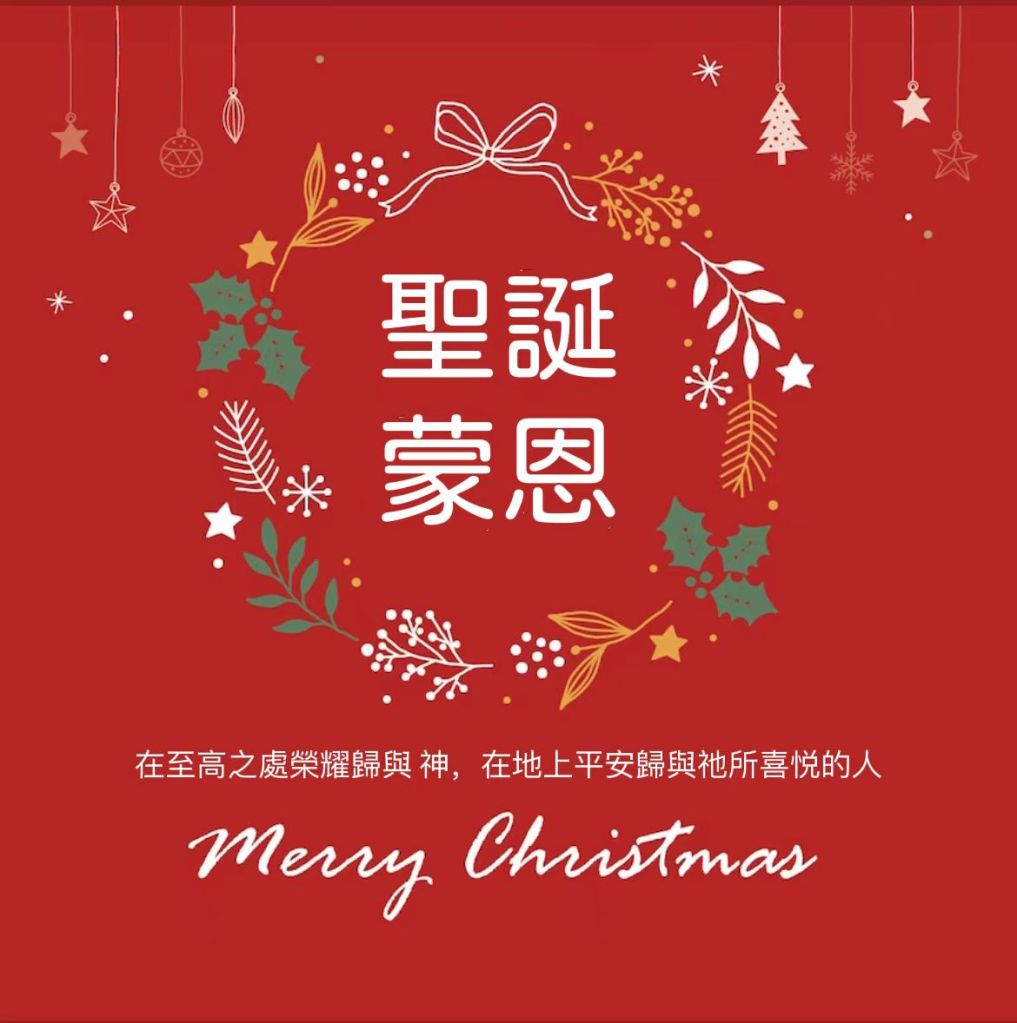
I also thought it was interesting to reflect on the meaning of “Merry Christmas” in Chinese, which effectively is “Happy Holy Birth”, a much more direct treatment than many communicate. Chinese are known for “high context” communication, but this one is fairly direct.

我也认为中文“圣诞快乐”的含义很有趣,实际上是“Happy Holy Birthday”,很直接。 中国人以“高语境”交流着称,但这个 名称相当直接。

A Christian Christmas message in Chinese

Granted, most in China seem to recognize Christmas by its consumerist traditions e.g. spending money, giving gifts, having parties and being with family. But, it’s recognized as a largely western religious holiday as well.

很显然,大多数中国人似乎通过其消费主义传统来认识圣诞节,例如 花钱,送礼物,开派对,和家人在一起。 但是,圣诞节也被公认为主要是西方的宗教节日。

And, what I find interesting is that Xmas is a Christian tradition of sorts as well. Here is an interesting article highlighting that since Christianity endured persecution in the early church and was illegal, X was a symbol (‘Chi’ in the Greek alphabet) that believers used to distinguish themselves and location.

而且,我觉得有趣的是,Xmas这样缩写Christmas也是某种基督教传统。 这里有一篇有趣的文章强调,由于基督教在早期教会遭受迫害并且是非法的,因此X是信徒用来区分自己和位置的符号(希腊字母中的’Chi’)

I found the Chi-Ro symbol (X and P in the Greek alphabet, representing ‘Christ’) particularly compelling. A symbol that Christians used to distinguish themselves under a persecutive culture. And, inevitably used by emperor Constantine on his battle standard.

我发现 Chi-Ro 符号(希腊字母中的 X 和 P,代表“基督”)特别引人注目。 基督徒在迫害文化下用来区分自己的象征。 并且,君士坦丁大帝决定使用在他的盾牌上。

Chi – Ro

This piece is brief and doesn’t really delve into larger issues. But, it’s clear from a cursory look that Christmas is a compelling tradition overall. And, that no matter which angle or at which point in time one looks, Jesus Christ is central to Christmas. And, it looks like, always has been.

这篇文章很简短,并没有真正深入探讨更大的问题。 但是,粗略地看一下,圣诞节总体上是一个引人注目的传统。 而且,无论从哪个角度或在哪个时间点看,耶稣基督都是圣诞节的中心。 而且,看起来,一直都是。

So, Happy Holy Birth to all!

那么,圣诞节快乐!🎄

Shanghai Lockdown: Second Time Around 

While Frank Sinatra and Henry Mancini crooned that “love was lovelier the second time around” I’m not sure there are too many sentiments worth celebrating when a lockdown comes around again. But, if experiencing things the second time around raises the level of intensity, this may be true whether in love or under lockdown.  

I was quite surprised by the level of anger people are feeling. We underwent a very painful lockdown for over two months, have slowly been opening up and finally for just a week now have been able to eat in restaurants and sit down in coffee shops (assuming our Covid QR codes show negative green, of course). So, it seems to have caught a wide swath of people off guard when our compound was put on lockdown again last night. 

What happened is this. Nearly a week ago, it was discovered that someone in building 9 of our 12-building compound was in contact with someone who was Covid-positive. This “close-contact” person was transferred by the authorities to a facility and building 9 was on lockdown with residents unable to leave. Other buildings were not on lockdown. Unfortunately, the person who had close contact became Covid-positive in the facility where they were transferred.  And, since that is now considered a positive case, our entire compound needs to go on lockdown for one week minimum with monitoring after.

Interestingly, there was a gap of several days after hearing about building 9 when other residents came and went as pleased. We began to be informally informed a day early that the compound would be locked down, and it was just a matter of time before the official announcement would be shared.  So, most residents went out and lived it up as much as possible on Saturday, eating out, shopping and meeting people.  We knew a lock down was coming designed to contain our contact with the outside world.  

Chew on that one for a bit. 

Sure enough.  Late Saturday night the official announcement came, the police were outside our compound and the fences went back up.

People here couldn’t believe their eyes.  They simply haven’t been able to get their heads around this logic, and there is endless chatter and guess work behind the thinking of this policy.  

Singing, Groping and….Coughing 

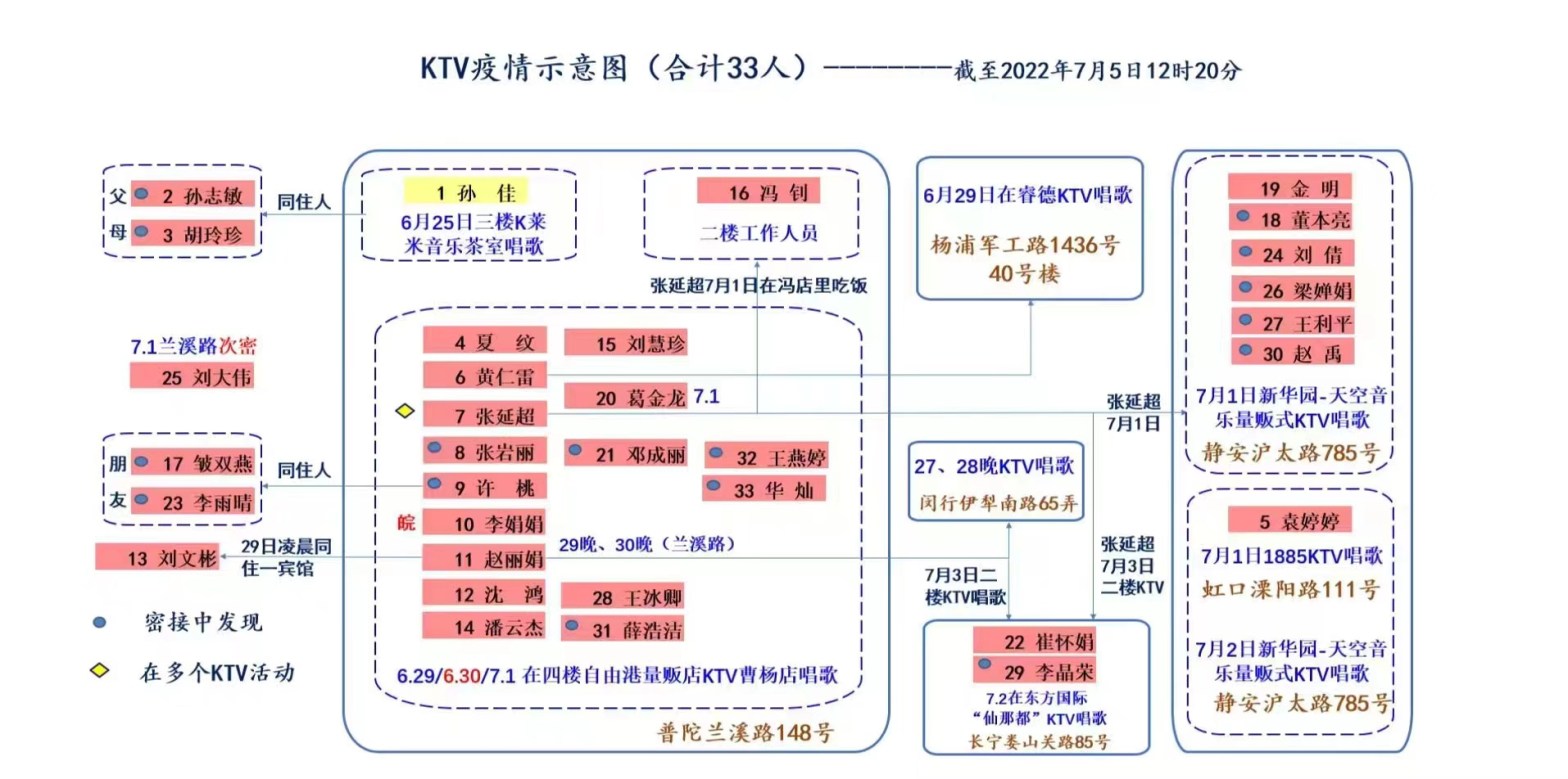
Just to illustrate the tracking ability of the local government, I include a diagram here which was shared in a group I’m in that someone in the local government created to analyze a recent situation at a KTV joint.  The story goes something like this. 

Karaoke has been a popular past time for some time in China. Unfortunately, some places are seedy. There are some karaoke parlors which offer young women to accompany patrons at a price. They sing, they pour beer, giggle and unfortunately get groped along the way. This is a kind of sick grey area prostitution. 

Rumor has it, car loads of old men went to a certain karaoke place to do this, leading to several Covid cases. At least, that’s the rumor. 

The authorities plot out who, how and where these people are and hunt them down. We can see how this works very clearly here in this embarrassing and very public sketch. We aren’t told who did what, and maybe the groping never happened.  Given the amount of unfounded rumor I’ve seen over the last few months, I wouldn’t be surprised if it was a nice group of people simply out having fun. 

Analysis of KTV patrons, their names, locations, and relationships

More Patience Needed on Hot Days 

To be clear, I don’t think our neighbor in building 9 had anything to do with this karaoke visit.  I show this as an illustration for how deep and detailed the surveillance goes. This zero tolerance is a very costly endeavor and demands much resources.

During our compound’s mass Covid testing which began at 7am this Sunday morning, my wife encountered an elderly man in the compound who was furious.  He couldn’t believe they would keep the neighborhood supermarkets where elderly buy daily vegetables closed to reduce human contact while opening karaoke places. Clearly someone is greasing the wheels. 

All of this context combined with the methodology above has led to some serious frustration.

Today, the temperature in Shanghai reached a historic near 106 Fahrenheit (41 Celsius) with a heat index of nearly 125 Fahrenheit (51 Celsius). I can’t remember experiencing this kind of heat in my life. 

Heat makes people do strange things. I’m grateful we don’t have Covid. This would be a terrible time to get a fever. 

To conclude this short (and, hopefully interesting) piece, I think of Benvolio’s words to his friend Mercutio before meeting his foe Tybalt and his end: 

I pray thee, good Mercutio, let’s retire.
The day is hot, the Capels are abroad,
And if we meet we shall not ’scape a brawl,
For now, these hot days, is the mad blood stirring.

“from Romeo and Juliet, Act III, Scene I”

Words of warning, from Elizabethan Shakespeare to post-modern Shanghai. 

Shanghai Lockdown: Covid Tests and Hamburgers for Easter

Growing up, I remember Cadbury cream eggs at Easter. I used to love those things. A hollow shell of chocolate with a creamy yellow and white nougat center oozing all over my hands. Some kids may remember Paas fuzzy rabbits or jelly beans. Those are good too. I also relished the vinegar-smelling liquid we’d dip our boiled eggs into with a special tool to change their shells to a light tint of blue, yellow or green. Once dry, mom would hide these around the house and have us hunt for them the next day.

Those were great traditions. But, the only tradition that stuck with me my whole life across the world and over the decades was celebrating the resurrection of Jesus Christ. Easter is a day of celebration, joy and new life. It’s a day to be happy and a day filled with hope. While the church we regularly attend was planning on a nice Easter lunch today, we’ve moved to an online format for over a month now due to Covid restrictions across the city. 

Throughout my life, this is one of the strangest Easters I’ve celebrated, no question. 

Covid Testing Bright and Early 

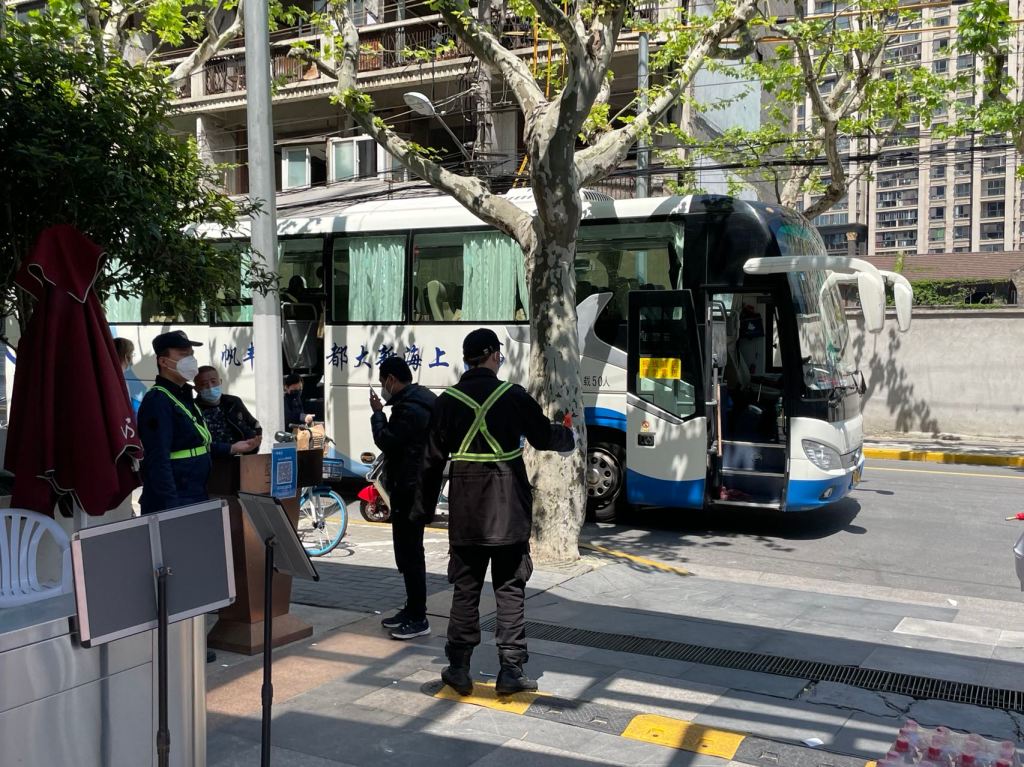
I received a notice in WeChat from our building management at 7:52 this morning informing that a round of Covid tests would be performed starting at 8am this morning, and we’d be notified by a knock on the door as to when that would begin. This was accompanied by a detailed description of exactly how this would play out and the related rules. This knock came around 10am I think it was. Down we go, waiting in single file along with the other people who live in our building. 

Testing notice from housing management this morning on WeChat

Last night, the group WeChat from our building sent a note with this update just prior to midnight. I immediately asked my wife not to set her alarm. Often these planned tests are delayed – and in one case was even cancelled as night fell. 

Easter Morning Testing

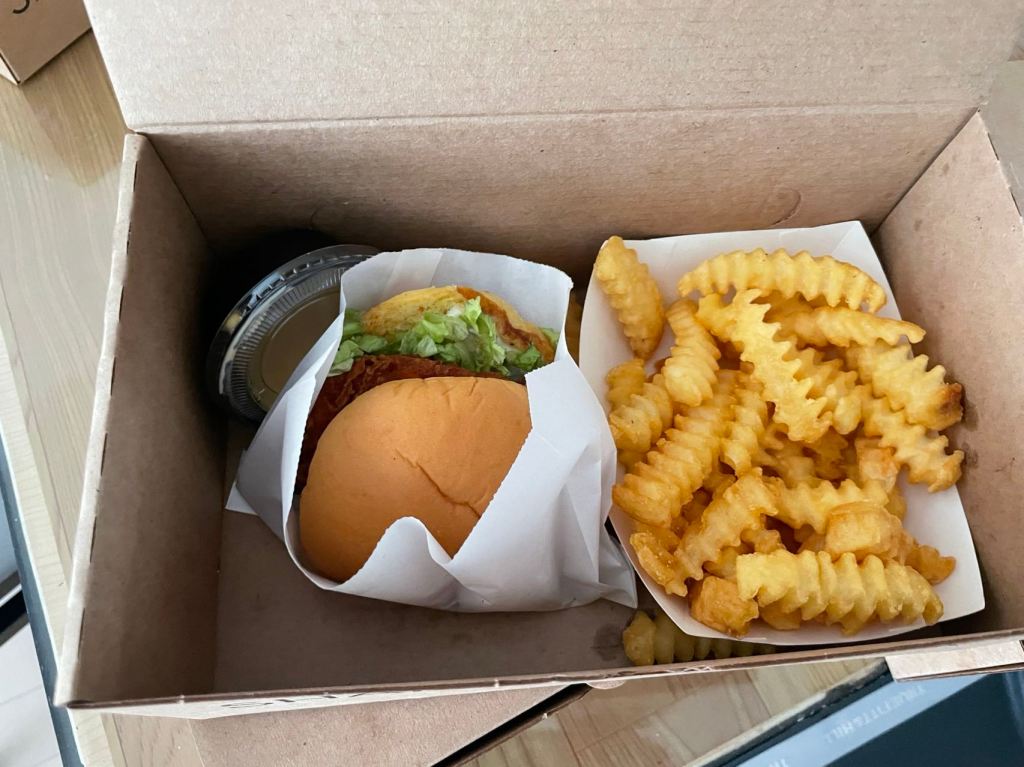
Indeed, we were glad to not need waking too early on a Sunday. The highlight of the day though was the arrival of Shake Shack just before lunch time. 

Placing Orders as a Big Group 

We’ve been under strict lockdown for about three weeks, defined as staying inside our apartment unless going downstairs for Covid tests. Since this has been the norm for the entire city, logistics have shut down. An urban culture that is used to same-or-next-day delivery and fresh groceries and food stuffs delivered within 30 minutes of placing an order by smart phone app, the current lockdown has been ground-shaking to say the least. The mostly young men who deliver food and other supplies are also on lockdown. This has led to massive issues getting last-mile delivery. 

An urgent response to this logistics nightmare has been group buying on a massive scale, where some stores keep themselves open and deliver large batches themselves to housing compounds. These stores will create a QR code with a set menu of items which one can scan and a brand promise of delivery to a compound meeting a certain minimum threshold. This leads to social media sharing on a grand scale as residents demand being a part of an individual order for everything from yogurt to hot pot. 

To reach the minimum amount, an organizer in our residential compound issues the menu and a call to action, and a commitment to making the order, generating a list that is shared in the group. Interested parties join the list and pay the organizer. When the order arrives, it gets distributed building by building downstairs and tenants can go and get it. Up until the past couple days, packages were delivered by security personnel in hazmat suits. 

Back to Shake Shack. 

Someone in building six adjacent to us issued a big group buying order call to action for the compound yesterday, and my wife – nimble as usual – jumped on the chance to get us hamburgers delivered just in time for Easter lunch. 

My wife is on top of all the group buying. She’s constantly checking a variety of chat groups and placing orders…all day long. I also notice much of what’s going on and make recommendations but it’s hard to stay so engaged. It’s absolutely exhausting to have this as a lifestyle and a cause of much anxiety to need to constantly look at the phone to make sure there’s an adequate variety of food in the fridge. 

Once this stuff is behind us, it will be time to put the phone down and try to take a few deep breaths. 

For now, we are grateful this year at Easter that after three weeks we could finally come downstairs in the compound, breathe the fresh air, feel the gentle spring breeze and run alongside the kids while they ride their bikes. While we have no visibility on when we can venture outside the compound, coming outside is still something to be grateful for. 

And, we are grateful for hamburgers and fries. May you too experience the joy of Resurrection Sunday. A day of new life and new hope. 

It’s easy to complain, but it’s more meaningful and motivating to find something to be grateful for today. 

Belonging and Identity: Internal Dissension and Purpose 归属感与身份:内部纠纷与目的

Warning: this is a bit of a personal reflection piece.

注:这篇文章主要是以自我思考为主。

I wrote about Belonging and Identity last year in April here:

去年4月份时,我在这里写了关于归属和身份的文章:

https://starkdiscussion.com/2021/04/01/belonging-and-identity-being-an-outsider/

It’s a topic I’ve been extremely interested in for a very long time, and I know it is highly relevant for many of us around the world, in particular for those who have chosen to emigrate to a new land for many years. We immigrants (I suppose I am one, in a sense, having spent nearly half my life away from my native country) struggle with identity. We want to be accepted in the new place where we live. We miss home, but don’t really feel like we belong there either.

这是一个我很长时间以来一直非常感兴趣的话题,我知道这对我们世界各地的许多人都非常重要,特别是那些多年来选择移民到新土地的人。我们这些移民(从某种意义上说,我想我是其中之一,在远离祖国的生活中度过了将近一半的时间)都在为身份而挣扎。我们希望在我们居住的新地方被接受。我们想家,但也不觉得我们属于那里了。

Priceless Tranquility 无价的宁静

For example, from the outside, the United States has acquired a new set of cultural norms. I have to admit there’s many cultural dynamics that don’t make a whole lot of sense to me right now. I love going home to spend time with family, and there is nothing like spending a day at Lake Michigan, the sea-sized freshwater lake that my home area shares with Chicago and Milwaukee.

例如,我观察美国文化这些年有些难以理解的变化。我必须承认,有些难以理解。我喜欢回家与家人共度时光,比如没有什么比在密歇根湖度过一天更好的事了。密歇根湖是我家所在地区与芝加哥和密尔沃基共享的一个海水大小的淡水湖。

There is a life-long internal dissension with wanting to return to the place of my youth when times were simpler and there was far less construction and white noise.

我想回到我年轻时的地方,这是一场终生的内部纠纷,当时的时代比较简单,建筑和白噪音要少得多。

Sidebar: right outside our apartment, there is a construction site that has been building a subway exit and mixed use shopping complex and office building since the outbreak of Covid. The site was largely open for a few years, and starting about six months ago the site secured an all night 24/7 construction permit. Over the past twenty years, I’ve needed to develop greater resilience and toughness toward noise. City life is loud anywhere. But, there is nothing like 24/7 construction to change the game.

注:就在我们公寓的外面,有一个建筑工地,自从新冠疫情爆发以来,它一直在修建地铁出口、多功能购物中心和办公楼。该场地基本开放了几年,从大约六个月前开始,该场地获得了全天候通宵施工许可证。在过去的二十年里,我需要对噪音有更大的恢复力和韧性。城市生活在任何地方都是喧闹的。但是,没有什么比全天候施工更令人烦恼的。

When the jackhammer roars at midnight, I hunger for the tranquility of small-town life in Michigan. A tranquility that seems intangible and of greater value than gold – or, maybe…Bitcoin?

当手提钻在午夜咆哮时,我渴望密歇根州小镇生活的宁静。一种无形的、比黄金更有价值的宁静——或者,也许。。。比比特币甚至更有价值。。。

So, I’ve been developing a ‘retirement strategy’ for the past few years targeting a return to the US in later years. Yet, I’m nearly certain that the strategy will fail. Or, rather, that this tranquility which is intangible is truly no where to be found.

因此,在过去几年中,我一直在制定一项“退休战略”,目标是在未来几年重返美国。然而,我几乎可以肯定,这一战略将失败。或者说,这种无形的宁静无论去哪里不会找到的。

I was thinking about this issue this morning, given the New Year. There’s a reason I left my home town, after all. I was a young man, seeking escape and adventure. The very tranquility that calls me today pushed me out yesterday.

今天早上,我想到了新的一年。毕竟,我离开家乡是有原因的。当时年轻,寻求逃避和冒险。今天召唤我的宁静,昨天把我推了出去。

There is such a vibrancy in Shanghai and an overall newness as the most cosmopolitan city in the fastest changing society in the world. In many respects, it really is the place to be.

作为世界上变化最快的社会中最具国际性的城市,上海充满了活力和全新的面貌。在许多方面,它确实是一个值得去的地方。

While I never set out to be an immigrant here, I greatly enjoy being a part of society. In my more reflective moments, I feel like ‘I’ve made it’. And, there are so many people I’ve been able to teach and mentor over the years – those who want to understand China more and vice versa.

虽然我从未打算成为这里的移民,但我非常喜欢成为社会的一部分。在我反思的时刻,我感觉自己“成功了”。而且,这些年来,我能教和指导的人太多了——他们想更多地了解中国,反之亦然。

It may be this sense of accomplishment that keeps me going. I remember when I just arrived here. I had no money, no job and was saddled with college debt. Those circumstances may have led to become more enterprising and hard-working than had I stayed home. Indeed, aren’t immigrants reputed to be hard-working people able to bear grunt work day in and day out until they ‘make it’ and earn their spurs, so to speak?

也许正是这种成就感让我不断前进。我记得我刚到这里的时候。我没有钱,没有工作,背负着大学债务。这些情况可能导致我变得比留在老家更加进取和勤奋。事实上,被誉为勤劳的移民难道不能日复一日地忍受繁重的工作直到他们“成功”了吗?

Meaning and Purpose 意义和目的

I struggle today with a different issue: is this it?

今天,我为一个不同的问题而挣扎:生活没有更大的目的吗?

This is a question that probably haunts most people my age. Once accomplishing what you set out to do, it’s easy to fall into a sense of dissatisfaction. I’ve undertaken the adventure of a lifetime, and I’m glad it’s worked out well. And, I’m worried about setting myself up for retirement so I can step out of the rat race and enjoy a life of tranquillity?

这个问题可能困扰着我这个年龄的大多数人。一旦完成了你定的目标,你很容易陷入一种不满感。我能经历很多人无法经历的东西,也冒了险。始终顺利,感恩。现在呢,担心自己退休规划,要从激烈竞争和工作走出来,享受平静的生活。

Yet, this isn’t really who I am.

然而,这并不是真正的我。

I think what I need is a new adventure. If that means moving back to the US and having massive reverse culture shock, so be it. But, maybe it’s something else. Maybe it’s going deeper into China. I’ve put nearly half my life into China and it makes no sense to pull out now.

我想我需要的是一次新的冒险。如果这意味着搬回美国并遭受大规模的反向文化冲击,那就这样吧。但是,也许是别的冒险。也许是更深入中国。我已经在中国投入了近一半的生命,现在退出是没有意义的。

2022 may be the year for new goals. The last time I recall having written goals was 2012, and we’ve reached many of them. One of my life goals that I established in 2012 that I have not reached and – indeed – wrote off complete is….drum roll…

2022年可能是实现新目标的一年。我记得上一次制定目标是在2012年,我们已经实现了很多目标。我在2012年制定的人生目标中,有一个目标我还没有达到,甚至还没有完成,那就是。。。

  • Wear Armani every day
  • 每天穿阿玛尼

That’s right. The most embarrassing and meaningless goal I’ve ever written in my entire life. Glad that one is behind me. I’m not even a fan of the brand any more. But, I think it’s time to dream big again. I think going forward, it’s about significance.

‘每天穿阿玛尼的衣服’是我一生中写过的最尴尬、最没有意义的目标。很高兴在身后。我甚至不再是这个品牌的粉丝了。但是,我认为是时候再次实现远大梦想了。我认为,展望未来,这关系到意义。

How many of us have given up on our dreams this past year? We’re likely sick of the headlines, Covid-concerns and geopolitics. While I don’t believe in fooling ourselves with false positivity, maybe this coming year presents a new opportunity to see things differently.

在过去的一年里,我们中有多少人放弃了梦想?我们可能已经厌倦了头条新闻、新冠疫情和地缘政治。虽然我不相信用假阳性来愚弄我们自己,但也许今年会给我们提供一个新的机会,让我们以不同的方式看待事情。

Seeing People as a Child Sees them 像孩子一样看人就那样看人

Maybe we need to see things with new eyes. My eyes were opened yesterday when I was speaking alone with my daughter and talking about my childhood experience in the United States and my concerns about the US. I shared that the American culture has turned away from following God’s principles. And, she asked what it was like in China. I said, better and better. And, there’s a lot of people who believe in God here. She began to say reference “our country” in her sentences and it suddenly struck me that she was referring to China.

也许我们需要用新的眼光看待事物。昨天,当我和女儿单独交谈,谈论我在美国的童年经历和当代的人民好像不那么按照主的道来生活,他问问中国如何。我说在中国越来越好,而且很多人信主。她开始在句子中提到“我们的国家”,我突意识到到她指的是中国。

Having been born and raised in China and spending all of that time with me, naturally “our country” and shared experience is China. It does sadden me that nearly all people here call her a “foreigner” when they see her though. She hasn’t realized it yet. But, wouldn’t it be wonderful if we didn’t emphasize blood and origin so much with each other? I am concerned that she won’t be fully accepted in her own place of origin when she gets older. Although her first language is Chinese and she’s just as Chinese as anyone else here, she has curly auburn hair which – though beautiful – makes her very different along with her other distinct features which I’ve passed along. My experience in this has been very frustrating (refer to the link at the top of this story for my other article on identity).

在中国出生和长大,一直和我在一起,对于她“我们的国家”和共同经历自然就是中国。我真的很难过,这里几乎所有的人看到她都叫她“外国人,老外,洋娃娃”。她还没有意识到这一点。但是,如果我们彼此不那么强调血统和起源,那不是很好吗?我担心她长大后在自己的原籍地不会被完全接受。虽然她的第一语言是汉语,她和这里的其他人一样是中国人,但她有一头卷曲的赤褐色头发,虽然很漂亮,但这让她和我所传递的其他特征与其他当地人样子非常不同。我在这方面的经历非常令人沮丧(我的另一篇关于身份的文章请参阅本文顶部的链接)。

I’ve never heard such a strong statement of verbal acceptance of my desired identity in China – and, it came from my daughter, who shares my experience in many ways. Yet, when I shared how I felt about this issue with my Chinese friends, I got a mostly confused response. They don’t share the experience and they don’t understand it for the most part, but they try to empathize. Diversity and Inclusion is a hot topic in the United States. But, it’s a global issue. It’s just that people make such a big deal about it in the US.

在中国,我从未听到过如此好喝真诚的一句接纳我的话语——而且,这来自我的女儿,她在许多方面分享了我的经历。然而,当我与我的中国朋友分享我对这个问题的感受时,人好想无法完全理解。他们没有这类的经历,但他们试着去理解。多样性和包容性在美国是一个热门话题。但是,这是一个全球性问题。只是在美国,人们对这件事非常重视。

If only we all saw the world the way a child does. If we could unconditionually accept people the way they do, there would be much more harmony in the world.

要是我们都像孩子一样看待这个世界就好了。如果我们能像TA们那样无条件的接受人们,世界将会更加和谐

Longevity and China’s Aviation Pioneer found in the City of Grace and Peace

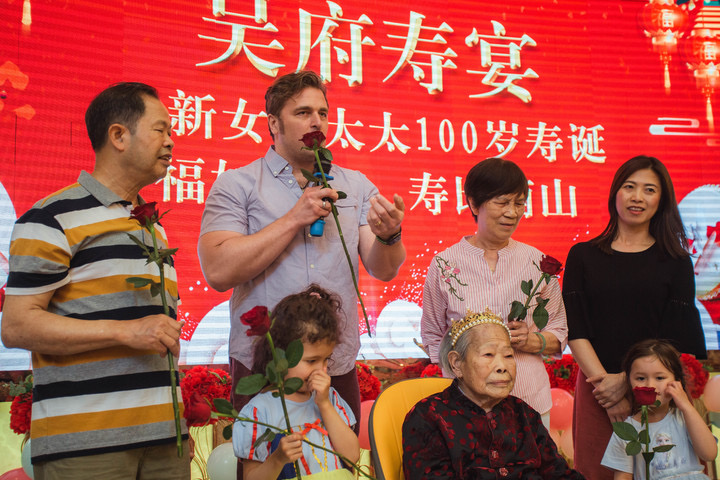
Very few of us live to be 100 years old. Something like 2% of us perhaps will make it. So, it was rare to celebrate my Chinese grandmother’s centenary this past month. The actual date of her birthday, according to my cousin, is 农历四月初六。This is the fourth day of April in the lunar calendar, or May 17th in the Gregorian calendar. Since the specific dates of the lunar calendar change annually, her birthday is marked by the annual week-long Chinese Labor Day holiday, which begins on May 1st. Not only is this easier to remember, but it’s much easier getting the relatives together. 

It’s also a bit confusing with my in-laws. We never know when their birthdays are because when they were born, time was marked by the lunar calendar. So, we celebrate my father-in-law’s birthday around the same time as my wife’s (whose birthday was marked by the Gregorian). It simplifies things, but I’ve always thought it would be cool to know the actual date so we could create a surprise of some kind. 

Going Deeper into China – to the City of Grace and Peace 

Grandma’s birthday was “19 tables” in size. The scale of Chinese celebrations is determined by the number of round tables that hold ten guests. Originally, there were to be 21 tables. Two tables couldn’t make it. We had the honor of sitting near the front. My father-in-law is the eldest child, and my wife is the eldest grandchild, so it’s a special honor. 

The party was held where grandma and the close family live, in the city of Enping (恩平). 

“Enping is a tier 16 city,” my cousin says in a matter-of-fact voice as he glances through the rear-view mirror. He’s spent his whole life here and done well for himself. He is married with a daughter, works in an energy company, has his own car and his own home which is a comfortable 20 minutes away. He’s always there ready to grab my suitcase at the train station when we visit. 

As long as I’ve been aware, cities in China have been organized by tiers. Tier one cities are the ones everyone outside China is familiar with: Beijing, Shanghai and Guangzhou (and, many are unfamiliar with Guangzhou (or, Canton, where ‘Cantonese’ comes from)). And, they go down from there. So, when my cousin said Enping – which literally means ‘grace and peace’ – ranks so low, I didn’t believe it. Granted, there is no airport. This has always struck me oddly since Enping is the home of ‘China’s Aviation Pioneer’, Feng Ru. 

China’s Aviation Pioneer – Unknown in America

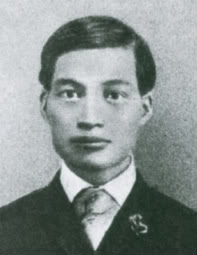
Though I never heard of Feng Ru (冯如)until my Chinese cousins led me up a hill once years ago to look at his memorial statue and tell me the story, his story can be found with a simple web search. Indeed, he was one of the great pioneers of the early twentieth century.  

According to an entry worldatlas.com published in 2018, China has over a 100 cities with a population over 1 million. This is over twice that of India, the runner-up and over 10 times that of the United States. 

Living in the center of the largest city in China (population of Shanghai must be nearly 30 million), it’s easy to scoff at cities that rank in the millions as “small towns”. According to a search on Baidu, Enping has a population of around 500,000 and is indeed a small city by Chinese standards. But, it’s still pretty big. Also on Baidu, Enping is a tier five or six city – certainly not a tier 16 city, as my cousin humbly claims!

Back to Feng Ru. I was amazed after doing some basic desk top research to learn that he was one of the world’s first pilots and airplane manufacturers. He built planes in Oakland, California, just a couple years after the Wright brothers took their historic flight. He was the first to fly over that part of the world.  

Yet, who’s heard of him? I met with a friend the other day from Oakland who comes from a Chinese heritage himself. He hadn’t heard of Feng Ru either. I find that somewhat sad. China’s Aviation Pioneer soon thereafter returned home to manufacture planes for his country. He died flying over my wife’s hometown in 1912, the city of Guangzhou. 

There’s been a recent surge of interest in the United States by Asian Americans – and, more broadly – in stories of people of Asian heritage who have made an impact on the local culture. Feng Ru would be someone worth celebrating, a man who is a pioneer in his own right but nearly completely overlooked. 

Traveling nowadays from Guangzhou to Enping is always entertaining. There is a high-speed train that takes only an hour and twenty minutes or so, but during the holidays it’s mostly standing tickets only. So, my father-in-law purchased mini stools for us all to sit on near the doors to make the trip as comfortable as possible. He’s got a stack of a dozen or more of these stools at home accumulated for just such a purpose. 

There is a noticeable change in the air when arriving at Enping. The city is tropical-hot, and considered part of a rain belt, getting ample rain throughout the year. But, there is a freshness in the air that invigorates. It’s the freshness I often experience when outside a megacity, being surrounded by mountains and lush vegetation. 

Breaking out of my Shell 

As we arrive at the venue, I learn that I am to give a brief speech on stage as part of a blessing to grandma. “You are the only foreigner in our family, and have quite a unique point of view,” I am told by my other cousin who is the primary organizer. 

I used to be an introvert but living in China has helped me break out of my shell. The first couple years were painful, sitting at the customary round tables surrounded by people always asking me a variety of questions in well-meaning fashion. Answering with broken Chinese and half sentences for a couple years, it’s amazing people had patience. It may also be part of why I would often drink too much on such occasions, easing social anxiety. 

To be fair, learning a foreign language requires the willingness to look and sound ridiculous, often. One needs to develop thick skin, which is really a valuable asset over time. So, when I learned that I’d be giving a blessing soon on stage, I wasn’t that surprised. But, I was concerned about saying the right thing. I wanted to make a positive impact and say something meaningful. I also assumed this would come at a later stage in the gala dinner. Yet, again, I was completely surprised. My father-in-law was saying something in Cantonese and then smiled and passed me the mic. 

I said something silly like saying my name and how long I’ve been married to her oldest grandchild. And, happily married! (Why did I just say that?!) I then recounted the first time I met grandma and how she welcomed me into the family. She was waiting outside her home for us and led me inside by hand. Though she couldn’t speak Mandarin and certainly would never guess her oldest grandchild would marry an American, her simple gesture was a huge statement of immediate acceptance. 

And, that’s from the heart. It may have sounded silly on stage. I don’t know. I wasn’t ready to give my brief speech yet. But, I’ve often found that when you speak from the heart, people listen and appreciate it either way.

The Power of Positivity?

The next day, we were relaxing at grandma’s house. I wanted to hear some insights about her life, so I asked some questions through my father-in-law (I’ll learn Cantonese next, I keep telling myself). What did she think about the party last night? 

“Expensive!  I just looked at all that food and drink, and I cannot imagine what that must have cost!” 

It doesn’t matter whether it’s China, the United States, or anywhere else. I trust that grandmas are the same around the world. My own grandmother just turned 93 and she is the absolute picture of energy. Her mind and memory are extremely sharp.

My wife said something that made me think: “I’ve never heard my grandmother complain. She’s had a hard life, but she’s never complained.” 

Come to think of it, my American grandmother is renowned for laughing and jokes herself. The late Norman Vincent Peale popularized the power of positive thinking in the American mind. Yet, there is something to it. 

If we complain less about people and our circumstances, will we too live to be one hundred?  It’s worth thinking about. 

Having Kids in China, Part Two: Chinese love kids, and children provide access to the good ‘ole days

My sister still laughs when this memory comes up. I was back home visiting my mom at her lake house in Michigan years ago. With floor to ceiling windows facing the small and peaceful lake, I couldn’t think of a better place of respite from bustling Beijing. Newspaper in hand, yanking back the lever of the plush La-Z-Boy hard, I was thinking: “finally”. 

My sister, Amy, came over with my young nephew, Vaughan, whom I’ve only seen a handful of times.  “Uncle Brad, can you play with me?” 

“I’m reading my newspaper,” I respond curtly without looking up. Amy laughs. 

Peaceful respite at the lake house

She still laughs today because I’ve changed from being a stuffy older-than-my-age stiff to a jolly young daddy, and the transition is massive. I never liked hanging around kids before I had my own. When people coo’d at cute little babies, I would try to find the furthest corner or exit. ‘Yeah, they’re cute. Great.” 

So, imagine my surprise to experience just how much Chinese love kids. We’ve all been taught about cultural differences, and probably if most of us are honest, we tend to prefer our own culture over any other. I like the way Americans interact. I like the way we work at the office, and I love the boundaries we place on work and family time. 

But, I have to admit. There are some cultural differences that may be superior to my own. There is one cultural asset that Chinese do better than anyone else I’ve seen. 

They absolutely love kids. Now, I know this is a generality and there are certainly exceptions. But, I’ve never seen people be more patient, more understanding, more appreciative of children than the Chinese people. They are wonderful with kids. 

Just to provide an example, my kids love taking the subway lately. It’s fresh and exciting. So, we take it when we can. And, when I step onto a crowded subway, immediately to my right and left, someone will stand up. Once catching eye contact, they smile and wave a hand over to the seat. My kids love standing on the subway, seizing the handles with their little hands in a small act of agency over the momentum until we get off. So, it takes me a bit of time to refuse a seat for myself or the kids. This act of kindness is so glaring because the subway can be one of the coldest places in public. People don’t talk. We look at our phones and shrug past one another without the slightest recognition. But, when a vulnerable child shows up, a light of warmth immediately lights up from one random stranger to another. 

Going back to the Good ‘Ole Days 

China’s a busy place still under radical transformation. It’s impossible to describe just how things are here to the uninitiated. One topic that continues to come up with Chinese I speak with is how much they miss the good ‘ole days. They miss the simpler days when they were younger and everyone knew each other in their housing compound, when people asked about each other and looked after each other. 

Indeed, before having kids I felt much lonelier. It’s hard to know neighbors. People don’t naturally greet each other in the elevators. I’m from the Midwest of the United States, a place famous for friendliness. People wave at strangers when passing on the sidewalk. Granted, the Midwest has received some attention for inauthentic friendliness (see “Midwest Nice”) but overall people in my hometown area are friendly and it feels nice. When growing up, I somehow learned that New Yorkers were cold and rude without having much exposure to them. I’ve had the pleasure since of having had two former bosses from New York City, both who were as direct as it gets – and, as generous as it gets. I’ve also been in a company famous for its collegial Midwest friendly culture that paid me far too low. So, it’s important to question assumptions as we go through life and acquire real experience. 

So, when Chinese tell me they miss the good ‘ole days, I naturally think about sincere midwestern friendliness. And, I’m not too far off the mark. They miss when no one had a lot of money and when the times were simpler. 

Having a child in China gives you access to the good ‘ole days, both the Chinese version and the Midwest American version. 

Losing Identity, or Acquiring a New Name 

It is nearly impossible to not make friends with the neighbors once you have kids. This started the moment our first daughter, Vera, was born. We moved into a quiet compound just prior to my wife getting pregnant. There were several parents like us, who had babies the same year we did. They too were working professionals. 

Some people make friends over cigarettes. Others over drinks. For us, children were the ultimate conversation starter. Whereas we once all needed to think about a shared topic before approaching a stranger, now there was an immediate connection.

“Look, it’s a little sister. Say hi to the little sister.” Chinese use terms that draw people closer. They would see my younger daughter as the little sister of their own somewhat older child. Immediate connection. Once you’re a sister, you’re no longer a stranger. And, so a conversation starts. And, the conversation turns into a regular parent acquaintance. And, the acquaintance turns into a genuine and quality friendship. 

I lived in Beijing for 15 years. Over this time, I’ve had many acquaintances and friends. But, nothing compared to the deluge of friendships that opened up through my children. Parenting is such a life-changing experience, and it’s a community experience. Parents share insight about what they’ve learned, where to go for the best childcare products, what kind of restaurants cater the best, etc. the topics are endless. 

And, in China there are the grandparents who often help with the childcare during the day while mom and dad work. They all get to know each other for an added layer of friendship. Then, there’s the Ayi’s who take care of the kids when the parents or grandparents don’t, for the third layer. 

The end result of this is an entirely new life dynamic of community where everyone gets to know each other, helps each other and is friendly for each other. And, it crosses socio-economic and cultural barriers. We had friends who were wealthy and friends who were not. Young children are the great equalizer in China. It really is a small taste of heaven. 

Our Beijing neighbors getting up early to see us off to Shanghai

One of the biggest adjustments I’ve had to make is losing my name and acquiring a new one. To this day, no one in our housing compounds know my name. This is true for Shanghai today as it was in Beijing in the past. I’m ‘Vera’s dad’ or ‘Nini’s dad’ depending upon the daughter being referenced. I had a hard time getting used to this, always believing parents should maintain their identity and welcome children into the family rather than making everything about the child. 

Then, I just got used to it. “Vera’s dad, do you want to get coffee next week?” one of my friends asked recently. He’s a cool guy, a partner in a law firm whose wife is a screenwriter, a very interesting couple we often meet as a family. I smiled when I heard him say it. 

So, rather than feeling like I need to maintain my own identity, I’ve become comfortable acquiring a new name and getting on with it. 

Some tips for enjoying the good ‘ole days in China: 

  • Have children and get ready. Of course, no one should have kids for any other purpose than wanting to have them. But, get ready to access new relationships and a whole new enjoyment of living in China once having them. This may be hard for people who are more introverted. But, if you can befriend at least a couple other parents nearby, the content of your conversations which will lead to authentic friendships can go quite deep. 
  • Be ok with losing your identity. Take on the new identity and the name that comes with it. No one will remember your name anymore but that’s fine. You won’t remember anyone else’s name either! It simplifies the communication anyway and it makes it kind of fun. Of course, people at work will call you by your name. But, outside work no one remembers it. Even your own family members will do this. For example, my mother-in-law calls my father-in-law ‘grandpa’ and vice versa. My wife and I still call each other by our own names, but that’s about it. 
  • Celebrate the culture with open eyes. It’s easy to be culture-critical. It’s more challenging – and, more meaningful – to keep your eyes open for cultural strength. One cultural attribute in China worth celebrating is how much Chinese value children and the benefits that come with parenting here. And, there are many, especially in the early years. I’m convinced that having children here for the first few years of life is one of the best in the world. It kind of makes me want to have more!