

Very few of us live to be 100 years old. Something like 2% of us perhaps will make it. So, it was rare to celebrate my Chinese grandmother’s centenary this past month. The actual date of her birthday, according to my cousin, is 农历四月初六。This is the fourth day of April in the lunar calendar, or May 17th in the Gregorian calendar. Since the specific dates of the lunar calendar change annually, her birthday is marked by the annual week-long Chinese Labor Day holiday, which begins on May 1st. Not only is this easier to remember, but it’s much easier getting the relatives together.
It’s also a bit confusing with my in-laws. We never know when their birthdays are because when they were born, time was marked by the lunar calendar. So, we celebrate my father-in-law’s birthday around the same time as my wife’s (whose birthday was marked by the Gregorian). It simplifies things, but I’ve always thought it would be cool to know the actual date so we could create a surprise of some kind.
Going Deeper into China – to the City of Grace and Peace
Grandma’s birthday was “19 tables” in size. The scale of Chinese celebrations is determined by the number of round tables that hold ten guests. Originally, there were to be 21 tables. Two tables couldn’t make it. We had the honor of sitting near the front. My father-in-law is the eldest child, and my wife is the eldest grandchild, so it’s a special honor.
The party was held where grandma and the close family live, in the city of Enping (恩平).
“Enping is a tier 16 city,” my cousin says in a matter-of-fact voice as he glances through the rear-view mirror. He’s spent his whole life here and done well for himself. He is married with a daughter, works in an energy company, has his own car and his own home which is a comfortable 20 minutes away. He’s always there ready to grab my suitcase at the train station when we visit.

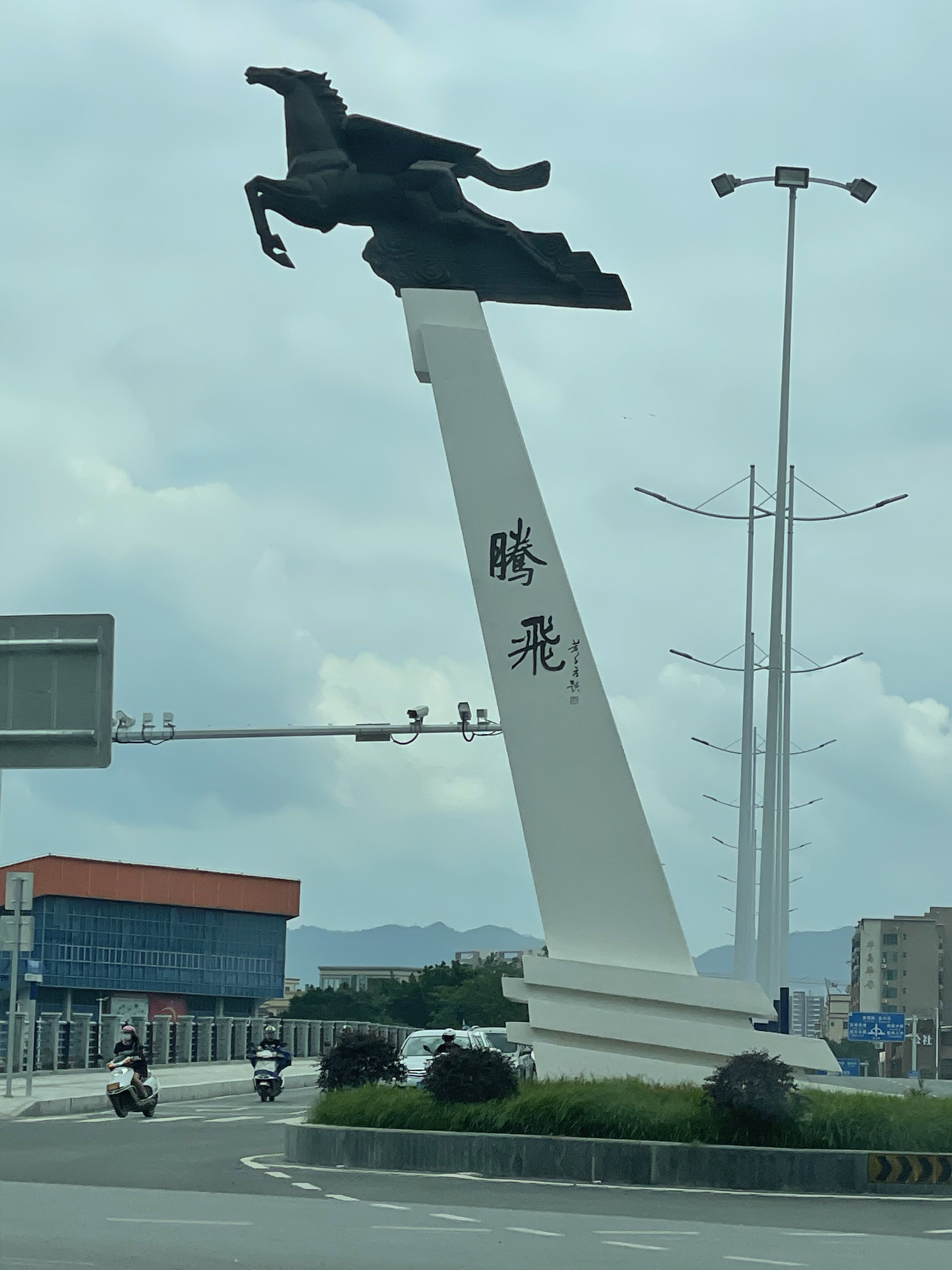
As long as I’ve been aware, cities in China have been organized by tiers. Tier one cities are the ones everyone outside China is familiar with: Beijing, Shanghai and Guangzhou (and, many are unfamiliar with Guangzhou (or, Canton, where ‘Cantonese’ comes from)). And, they go down from there. So, when my cousin said Enping – which literally means ‘grace and peace’ – ranks so low, I didn’t believe it. Granted, there is no airport. This has always struck me oddly since Enping is the home of ‘China’s Aviation Pioneer’, Feng Ru.
China’s Aviation Pioneer – Unknown in America
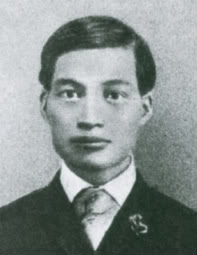
Though I never heard of Feng Ru (冯如)until my Chinese cousins led me up a hill once years ago to look at his memorial statue and tell me the story, his story can be found with a simple web search. Indeed, he was one of the great pioneers of the early twentieth century.
According to an entry worldatlas.com published in 2018, China has over a 100 cities with a population over 1 million. This is over twice that of India, the runner-up and over 10 times that of the United States.
Living in the center of the largest city in China (population of Shanghai must be nearly 30 million), it’s easy to scoff at cities that rank in the millions as “small towns”. According to a search on Baidu, Enping has a population of around 500,000 and is indeed a small city by Chinese standards. But, it’s still pretty big. Also on Baidu, Enping is a tier five or six city – certainly not a tier 16 city, as my cousin humbly claims!
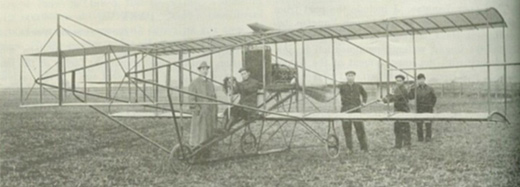
Back to Feng Ru. I was amazed after doing some basic desk top research to learn that he was one of the world’s first pilots and airplane manufacturers. He built planes in Oakland, California, just a couple years after the Wright brothers took their historic flight. He was the first to fly over that part of the world.
Yet, who’s heard of him? I met with a friend the other day from Oakland who comes from a Chinese heritage himself. He hadn’t heard of Feng Ru either. I find that somewhat sad. China’s Aviation Pioneer soon thereafter returned home to manufacture planes for his country. He died flying over my wife’s hometown in 1912, the city of Guangzhou.
There’s been a recent surge of interest in the United States by Asian Americans – and, more broadly – in stories of people of Asian heritage who have made an impact on the local culture. Feng Ru would be someone worth celebrating, a man who is a pioneer in his own right but nearly completely overlooked.
Traveling nowadays from Guangzhou to Enping is always entertaining. There is a high-speed train that takes only an hour and twenty minutes or so, but during the holidays it’s mostly standing tickets only. So, my father-in-law purchased mini stools for us all to sit on near the doors to make the trip as comfortable as possible. He’s got a stack of a dozen or more of these stools at home accumulated for just such a purpose.
There is a noticeable change in the air when arriving at Enping. The city is tropical-hot, and considered part of a rain belt, getting ample rain throughout the year. But, there is a freshness in the air that invigorates. It’s the freshness I often experience when outside a megacity, being surrounded by mountains and lush vegetation.
Breaking out of my Shell
As we arrive at the venue, I learn that I am to give a brief speech on stage as part of a blessing to grandma. “You are the only foreigner in our family, and have quite a unique point of view,” I am told by my other cousin who is the primary organizer.
I used to be an introvert but living in China has helped me break out of my shell. The first couple years were painful, sitting at the customary round tables surrounded by people always asking me a variety of questions in well-meaning fashion. Answering with broken Chinese and half sentences for a couple years, it’s amazing people had patience. It may also be part of why I would often drink too much on such occasions, easing social anxiety.
To be fair, learning a foreign language requires the willingness to look and sound ridiculous, often. One needs to develop thick skin, which is really a valuable asset over time. So, when I learned that I’d be giving a blessing soon on stage, I wasn’t that surprised. But, I was concerned about saying the right thing. I wanted to make a positive impact and say something meaningful. I also assumed this would come at a later stage in the gala dinner. Yet, again, I was completely surprised. My father-in-law was saying something in Cantonese and then smiled and passed me the mic.
I said something silly like saying my name and how long I’ve been married to her oldest grandchild. And, happily married! (Why did I just say that?!) I then recounted the first time I met grandma and how she welcomed me into the family. She was waiting outside her home for us and led me inside by hand. Though she couldn’t speak Mandarin and certainly would never guess her oldest grandchild would marry an American, her simple gesture was a huge statement of immediate acceptance.


And, that’s from the heart. It may have sounded silly on stage. I don’t know. I wasn’t ready to give my brief speech yet. But, I’ve often found that when you speak from the heart, people listen and appreciate it either way.
The Power of Positivity?
The next day, we were relaxing at grandma’s house. I wanted to hear some insights about her life, so I asked some questions through my father-in-law (I’ll learn Cantonese next, I keep telling myself). What did she think about the party last night?
“Expensive! I just looked at all that food and drink, and I cannot imagine what that must have cost!”
It doesn’t matter whether it’s China, the United States, or anywhere else. I trust that grandmas are the same around the world. My own grandmother just turned 93 and she is the absolute picture of energy. Her mind and memory are extremely sharp.
My wife said something that made me think: “I’ve never heard my grandmother complain. She’s had a hard life, but she’s never complained.”
Come to think of it, my American grandmother is renowned for laughing and jokes herself. The late Norman Vincent Peale popularized the power of positive thinking in the American mind. Yet, there is something to it.
If we complain less about people and our circumstances, will we too live to be one hundred? It’s worth thinking about.
 Stark Discussion
Interesting
LikeLike