
My sister still laughs when this memory comes up. I was back home visiting my mom at her lake house in Michigan years ago. With floor to ceiling windows facing the small and peaceful lake, I couldn’t think of a better place of respite from bustling Beijing. Newspaper in hand, yanking back the lever of the plush La-Z-Boy hard, I was thinking: “finally”.
My sister, Amy, came over with my young nephew, Vaughan, whom I’ve only seen a handful of times. “Uncle Brad, can you play with me?”
“I’m reading my newspaper,” I respond curtly without looking up. Amy laughs.

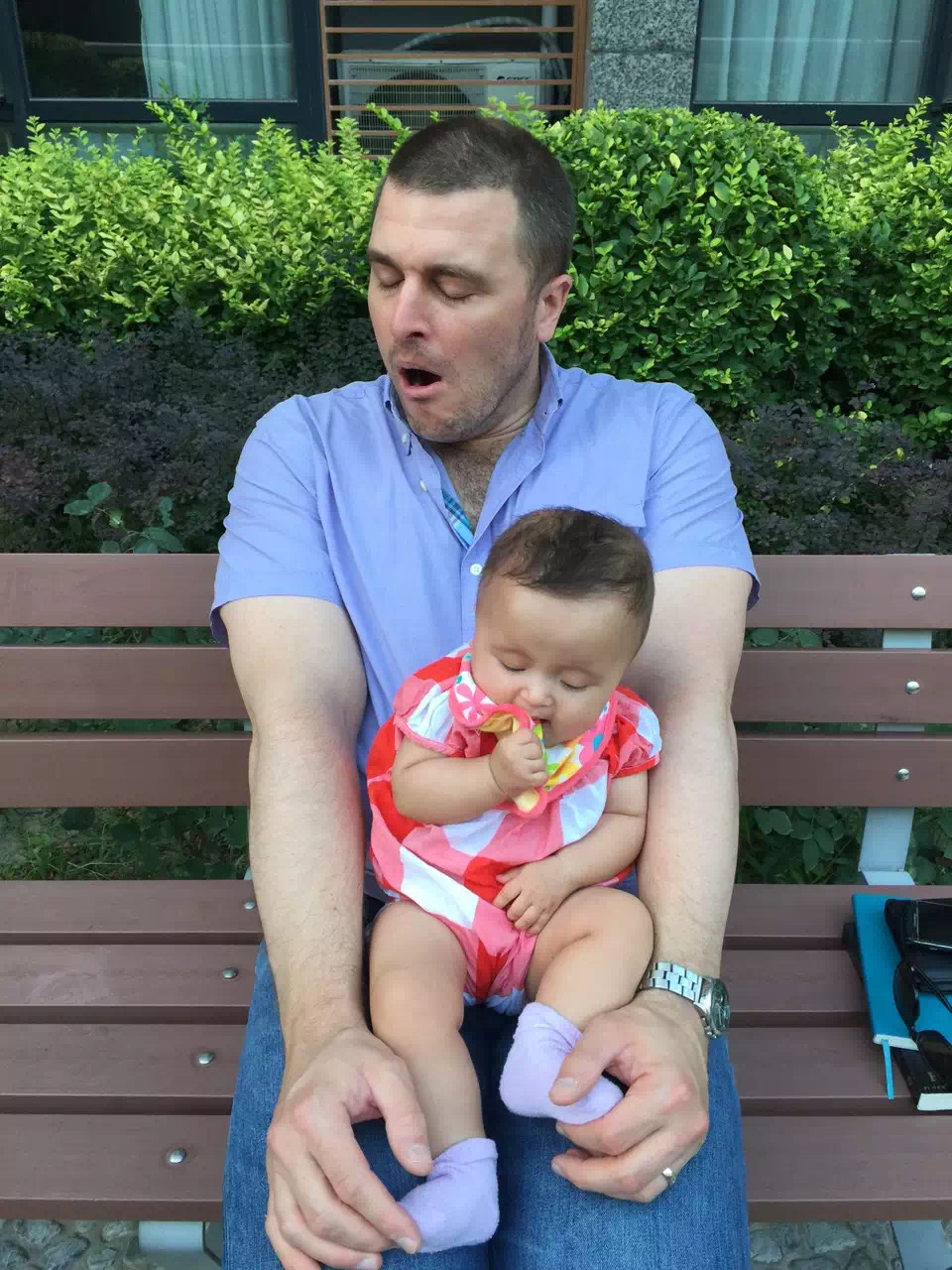
She still laughs today because I’ve changed from being a stuffy older-than-my-age stiff to a jolly young daddy, and the transition is massive. I never liked hanging around kids before I had my own. When people coo’d at cute little babies, I would try to find the furthest corner or exit. ‘Yeah, they’re cute. Great.”
So, imagine my surprise to experience just how much Chinese love kids. We’ve all been taught about cultural differences, and probably if most of us are honest, we tend to prefer our own culture over any other. I like the way Americans interact. I like the way we work at the office, and I love the boundaries we place on work and family time.
But, I have to admit. There are some cultural differences that may be superior to my own. There is one cultural asset that Chinese do better than anyone else I’ve seen.
They absolutely love kids. Now, I know this is a generality and there are certainly exceptions. But, I’ve never seen people be more patient, more understanding, more appreciative of children than the Chinese people. They are wonderful with kids.
Just to provide an example, my kids love taking the subway lately. It’s fresh and exciting. So, we take it when we can. And, when I step onto a crowded subway, immediately to my right and left, someone will stand up. Once catching eye contact, they smile and wave a hand over to the seat. My kids love standing on the subway, seizing the handles with their little hands in a small act of agency over the momentum until we get off. So, it takes me a bit of time to refuse a seat for myself or the kids. This act of kindness is so glaring because the subway can be one of the coldest places in public. People don’t talk. We look at our phones and shrug past one another without the slightest recognition. But, when a vulnerable child shows up, a light of warmth immediately lights up from one random stranger to another.
Going back to the Good ‘Ole Days
China’s a busy place still under radical transformation. It’s impossible to describe just how things are here to the uninitiated. One topic that continues to come up with Chinese I speak with is how much they miss the good ‘ole days. They miss the simpler days when they were younger and everyone knew each other in their housing compound, when people asked about each other and looked after each other.
Indeed, before having kids I felt much lonelier. It’s hard to know neighbors. People don’t naturally greet each other in the elevators. I’m from the Midwest of the United States, a place famous for friendliness. People wave at strangers when passing on the sidewalk. Granted, the Midwest has received some attention for inauthentic friendliness (see “Midwest Nice”) but overall people in my hometown area are friendly and it feels nice. When growing up, I somehow learned that New Yorkers were cold and rude without having much exposure to them. I’ve had the pleasure since of having had two former bosses from New York City, both who were as direct as it gets – and, as generous as it gets. I’ve also been in a company famous for its collegial Midwest friendly culture that paid me far too low. So, it’s important to question assumptions as we go through life and acquire real experience.

So, when Chinese tell me they miss the good ‘ole days, I naturally think about sincere midwestern friendliness. And, I’m not too far off the mark. They miss when no one had a lot of money and when the times were simpler.
Having a child in China gives you access to the good ‘ole days, both the Chinese version and the Midwest American version.
Losing Identity, or Acquiring a New Name
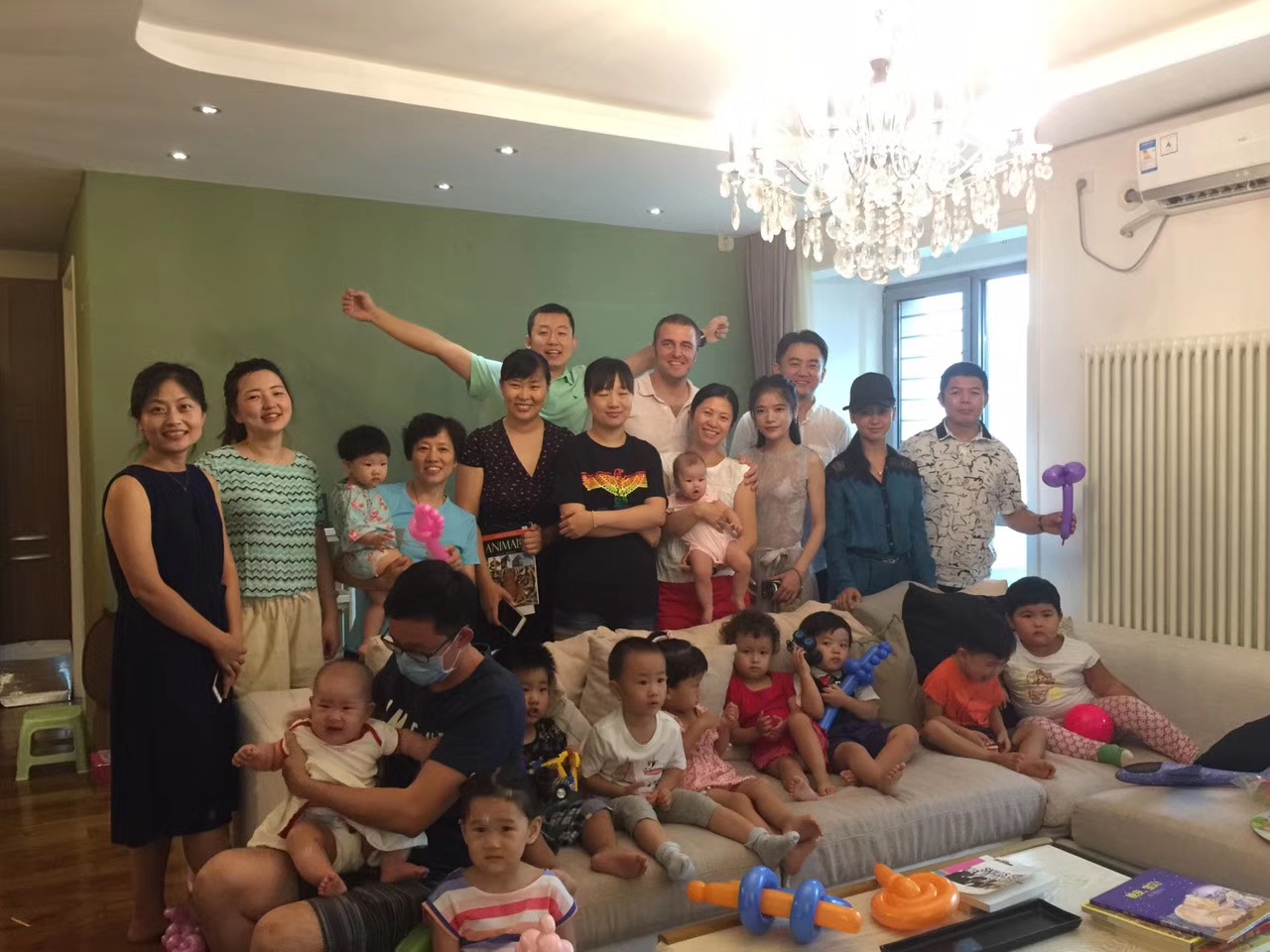
It is nearly impossible to not make friends with the neighbors once you have kids. This started the moment our first daughter, Vera, was born. We moved into a quiet compound just prior to my wife getting pregnant. There were several parents like us, who had babies the same year we did. They too were working professionals.
Some people make friends over cigarettes. Others over drinks. For us, children were the ultimate conversation starter. Whereas we once all needed to think about a shared topic before approaching a stranger, now there was an immediate connection.
“Look, it’s a little sister. Say hi to the little sister.” Chinese use terms that draw people closer. They would see my younger daughter as the little sister of their own somewhat older child. Immediate connection. Once you’re a sister, you’re no longer a stranger. And, so a conversation starts. And, the conversation turns into a regular parent acquaintance. And, the acquaintance turns into a genuine and quality friendship.
I lived in Beijing for 15 years. Over this time, I’ve had many acquaintances and friends. But, nothing compared to the deluge of friendships that opened up through my children. Parenting is such a life-changing experience, and it’s a community experience. Parents share insight about what they’ve learned, where to go for the best childcare products, what kind of restaurants cater the best, etc. the topics are endless.
And, in China there are the grandparents who often help with the childcare during the day while mom and dad work. They all get to know each other for an added layer of friendship. Then, there’s the Ayi’s who take care of the kids when the parents or grandparents don’t, for the third layer.
The end result of this is an entirely new life dynamic of community where everyone gets to know each other, helps each other and is friendly for each other. And, it crosses socio-economic and cultural barriers. We had friends who were wealthy and friends who were not. Young children are the great equalizer in China. It really is a small taste of heaven.

One of the biggest adjustments I’ve had to make is losing my name and acquiring a new one. To this day, no one in our housing compounds know my name. This is true for Shanghai today as it was in Beijing in the past. I’m ‘Vera’s dad’ or ‘Nini’s dad’ depending upon the daughter being referenced. I had a hard time getting used to this, always believing parents should maintain their identity and welcome children into the family rather than making everything about the child.
Then, I just got used to it. “Vera’s dad, do you want to get coffee next week?” one of my friends asked recently. He’s a cool guy, a partner in a law firm whose wife is a screenwriter, a very interesting couple we often meet as a family. I smiled when I heard him say it.
So, rather than feeling like I need to maintain my own identity, I’ve become comfortable acquiring a new name and getting on with it.
Some tips for enjoying the good ‘ole days in China:
- Have children and get ready. Of course, no one should have kids for any other purpose than wanting to have them. But, get ready to access new relationships and a whole new enjoyment of living in China once having them. This may be hard for people who are more introverted. But, if you can befriend at least a couple other parents nearby, the content of your conversations which will lead to authentic friendships can go quite deep.
- Be ok with losing your identity. Take on the new identity and the name that comes with it. No one will remember your name anymore but that’s fine. You won’t remember anyone else’s name either! It simplifies the communication anyway and it makes it kind of fun. Of course, people at work will call you by your name. But, outside work no one remembers it. Even your own family members will do this. For example, my mother-in-law calls my father-in-law ‘grandpa’ and vice versa. My wife and I still call each other by our own names, but that’s about it.
- Celebrate the culture with open eyes. It’s easy to be culture-critical. It’s more challenging – and, more meaningful – to keep your eyes open for cultural strength. One cultural attribute in China worth celebrating is how much Chinese value children and the benefits that come with parenting here. And, there are many, especially in the early years. I’m convinced that having children here for the first few years of life is one of the best in the world. It kind of makes me want to have more!
 Stark Discussion