
“Bradley, you’ve gained weight again,” she pipes with high-pitched confidence and purely good intentions (at least I think). The elevator opens and she moves toward the break room, seizing a small square cloth to begin wiping the table.
Dejected once again, I walk past desks and desks of young and slim Chinese men and women in the Beijing office who take no notice of fattie Braddie as I saunter toward my own desk in the far end of the room. Safely inside my corner cubicle, I can boot up my computer and meekly message people from behind a mouse. There’s a long day ahead of me.
ACT II: THE FOLLOWING DAY. SCENE: THE SAME EMPLOYEE ELEVATOR. SAME LADY.
“Bradley, you’re gaining weight again,” she pipes up again over the sound of others speaking and through spectacles with hair cut short and curly so common for late-fifties women regardless of country of origin.
What the heck am I letting this lady bully me for? This is ridiculous. She doesn’t have any sense of style herself and she could be my mother, for crying out loud.
Before she walks over to pick up a cloth and start dusting, I decide it’s time to stick up for myself. “Look, you’ve been saying I’ve been gaining weight for weeks now. That’s ridiculous and impossible. There’s no way I can gain weight daily,” I plead.
Finally, I’m vulnerable and it shows.
“Bradley, it’s very good to gain weight. Very healthy.”
I can’t win. After complaining to a colleague about the company cleaning lady who seems to have no sense of propriety or boundaries, I get a different perspective.
“Chinese say this to draw each other closer. It’s not meant to be offensive. She really likes you, and is watching out for you,” my colleague shares.
Kind of like a mom. I guess it would be the cultural equivalent of the exact opposite statement you may hear from some parts of the US.
“Son, you need to get some meat on those bones.”
For some people, that would sound offensive. For me, it simply sounds like some good-natured commentary, and I wouldn’t think anything of it. And, come to think of it, that cleaning lady really did like me and treated me very well. I think she relished the novelty of speaking with a foreigner directly and had that great nature of how Beijingers watch out for their foreign friends.
Well, I’ve been eavesdropping on people telling others they are getting fat or getting too thin for years now, and the jury is still out in my head. I can’t tell if people are fine with it or not. Certainly, Chinese don’t take nearly as much offense at it as I did.
Pan over to the United States.
If I spend too much time on the Yahoo home page, I’ll learn new vocabulary like “body shaming” and I’m sure many other terms that are very foreign here.
The cover story of the weekend magazine for The Wall Street Journal this past couple weeks is Ashley Graham, the renown plus-sized model who made her name from breaking out in Sports Illustrated. Entitled “Her Game, Her Rules”, a cursory flip through the glossy will reveal larger confidence in a variety of poses.
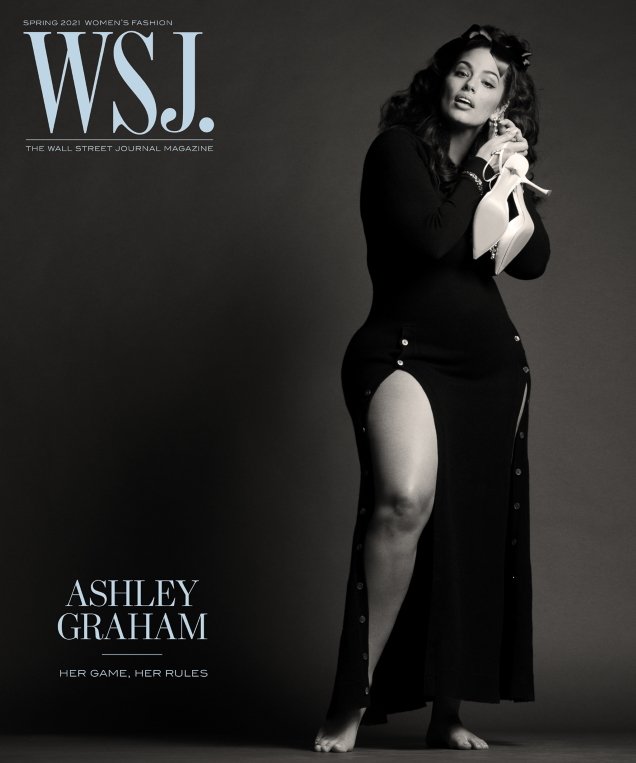
It’s probably a good thing to celebrate a range of weight options as definitions of beauty, as long as people actually feel that way. And, I guess that’s the key question. Do people actually see larger size as more beautiful or is it a way to legitimize a cultural issue of over nutrition?
There’s no question that I gained weight when I was in the US in 2018 and the primary reason was that I was like a child in a candy store. Quite literally.
Milk Duds would halt me in my tracks during a Target run. Oh, man. Milk Duds! I haven’t seen those for years. That creamy caramel (pronounced care-a-mell like in the commercials) surrounded by smooth chocolate. I’m getting the large sized carton. And, why not? I deserve it.
And, I’d hop into the car and drive home.
Milk Duds. Buffalo Wings with bleu (spelled like that) cheese. Ghirardelli chocolate squares with salted care-a-mell filling. You name it, I owned it. Ate it. Then, wore it.
Now, I’m not saying all Americans do that. I’m saying that was my experience. And, combined with a general lack of mobility for months it was impossible for me to not gain weight.
But, in no way am I going to celebrate that as my new standard of what is handsome. I used to make a joke with people that during international flights, my confidence would begin to rise the closer I would get to the US timezone and subsequently sink the closer I would get to the China timezone – where I’m fat to everyone who cares to say so.
In the US, I look great. So does everyone else.
Just open up FaceBook. “Looking great!” “Beautiful!” “You’re wonderful”. It seems like a culture of affirmation and encouragement. But, I question some of the authenticity.
Then, you get to China which seems like a culture of criticism and discouragement. But, that too is not fully the case. Neither culture can be oversimplified.
Yet, I look around. And, these people are in pretty good shape. I have always wondered is part of the reason because they are always hearing people tell them they are gaining weight. Almost like a social system of keeping themselves in check.
I don’t know though. The most popular celebrity today in China is an actress names Yang Mi (below). She’s everywhere. I personally don’t see the massive appeal. But, I attribute this to my age. In China, it seems like the standard of beauty over the past decade has become the opposite of the US – it has moved toward thinner people.

I can’t stand people telling me I’m gaining weight. But, I don’t want people telling me I look great if I clearly have work to do. It’s not good for my health to gain weight.
Frankly, my take is that I don’t think either cultural approach is ideal. We shouldn’t be commenting on people’s figures. It’s simply not helpful. We also shouldn’t be praising people inauthentically.
The jury is out with me so far on this one. But, it came to mind today while I saw US advertising in a mall that there seems to be a huge cultural gap that I thought would be interesting to highlight.
Let me know.
 Stark Discussion